
“`html
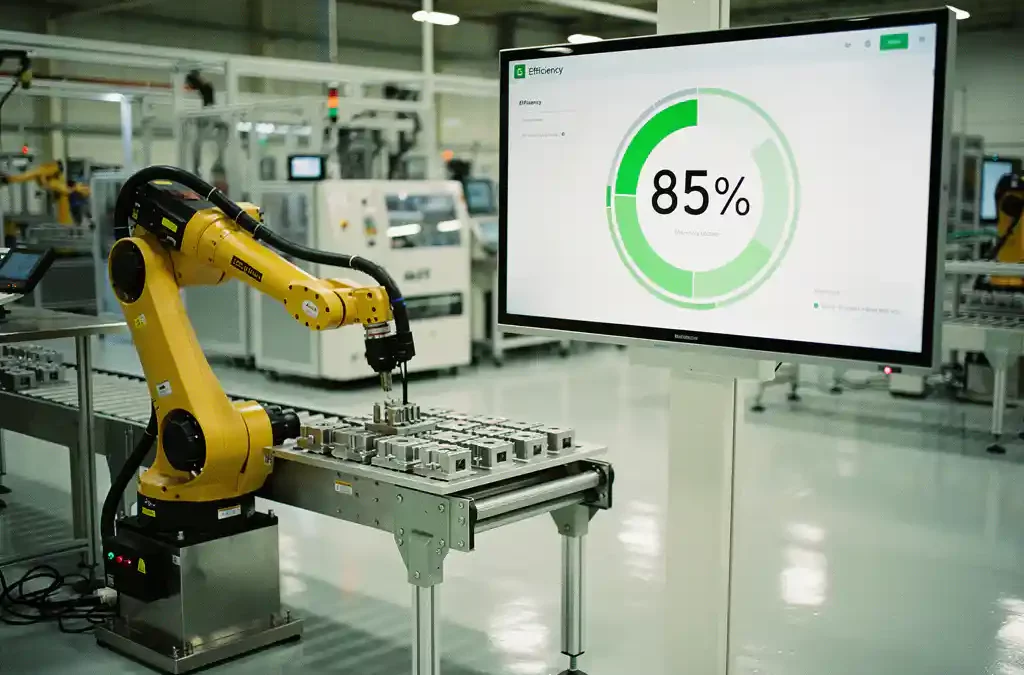
Achieving an OEE (Overall Equipment Effectiveness) of 85% is considered world-class because it reflects optimal utilization of manufacturing resources. This benchmark indicates that a factory is effectively minimizing downtime, running at target speeds, and producing high-quality products. World-class OEE is crucial for competitive advantage, as it signifies efficient operations and maximized productivity. In this article, we’ll explore how OEE is calculated, why 85% is the gold standard, and how manufacturers can improve their OEE to reach this level.
What is OEE and why is it important?
OEE, or Overall Equipment Effectiveness, is a metric used to measure the efficiency of manufacturing processes. It combines three key factors: availability, performance, and quality. OEE is important because it provides a comprehensive view of how well production equipment is utilized, highlighting areas for improvement. By analyzing OEE, manufacturers can identify inefficiencies, reduce waste, and enhance productivity.
In the manufacturing world, OEE serves as a critical benchmark for operational success. It helps businesses understand their production capabilities and identify bottlenecks. With this insight, companies can implement targeted strategies to improve their processes, ultimately leading to cost savings and increased output.
How is OEE calculated?
OEE is calculated by multiplying three components: availability, performance, and quality. Each component is expressed as a percentage, and the resulting product gives the OEE score. Availability measures the percentage of scheduled time that the equipment is available for production. Performance evaluates whether the equipment is operating at its maximum speed. Quality assesses the proportion of good parts produced versus total parts.
To calculate OEE, follow these steps:
- Calculate availability: (Operating Time / Planned Production Time) × 100
- Calculate performance: (Ideal Cycle Time × Total Count) / Operating Time × 100
- Calculate quality: (Good Count / Total Count) × 100
- Multiply the three percentages to get the OEE score.
Understanding these components allows manufacturers to pinpoint specific areas that need improvement, whether it’s reducing downtime, increasing speed, or enhancing product quality.
Why is 85% OEE considered world-class?
An OEE score of 85% is considered world-class because it indicates that a manufacturing operation is performing at a highly efficient level. This benchmark reflects minimal downtime, optimal performance speeds, and high-quality output. Achieving this level of OEE is rare and signifies that a company is maximizing its production capabilities.
Reaching an 85% OEE requires a well-coordinated effort across all aspects of production. It involves continuous monitoring and improvement of processes, as well as investment in technology and training. Companies that achieve this level of efficiency often lead their industries in terms of productivity and profitability.
What are the benefits of achieving world-class OEE?
Achieving world-class OEE offers numerous benefits, including increased productivity, reduced operational costs, and improved product quality. High OEE scores lead to more efficient use of resources, minimizing waste and maximizing output. This efficiency translates into cost savings and higher profit margins.
Additionally, world-class OEE enhances a company’s competitive edge. It allows manufacturers to meet customer demands more effectively and respond swiftly to market changes. This agility is crucial in today’s fast-paced manufacturing environment, where customer expectations and technological advancements are constantly evolving.
How can manufacturers improve their OEE?
Manufacturers can improve their OEE by focusing on reducing downtime, optimizing performance, and enhancing quality. Implementing real-time monitoring systems, such as Factorise’s digital manufacturing platform, can provide valuable insights into production processes and help identify areas for improvement.
Other strategies include adopting lean manufacturing principles, investing in employee training, and maintaining equipment regularly. By addressing these areas, manufacturers can systematically enhance their OEE, moving closer to the world-class benchmark.
What challenges do manufacturers face in achieving high OEE?
Manufacturers face several challenges in achieving high OEE, including equipment downtime, inefficient processes, and quality control issues. These challenges often stem from outdated technology, lack of real-time data, and insufficient employee training. Overcoming these obstacles requires a strategic approach and investment in modern solutions.
Factorise offers a comprehensive platform that helps manufacturers address these challenges by providing real-time data and insights. This enables companies to make informed decisions and implement effective improvements. Ready to take the first step? We like to start with a fit-gap session: a day or two to understand where you are, which pain points are most urgent, and which modules deliver the fastest value. Book your first fit-gap session. No sales pitch. Just an honest conversation about what’s realistic.
“`
Related Articles
- What is the cost of unplanned downtime in manufacturing?
- How do you track machine downtime in a factory?
- What is the difference between planned and unplanned downtime?
- What is MTTR in manufacturing?
- How do you improve production efficiency in a factory?
- What is MTBF and how do you calculate it?
- What is unplanned downtime in manufacturing?
- Why do most factories measure OEE but few act on it?
- How do you improve OEE in manufacturing?
- Does the 85% OEE benchmark apply to every type of factory?
- How do you build a performance culture on the shopfloor?
- What is performance in OEE?
- What is quality in OEE?
- How do you measure performance losses in OEE?
- What is world-class OEE and how far is the average factory from achieving it?