
Industry.
Food & Beverage
Every batch traceable. Every shift on schedule
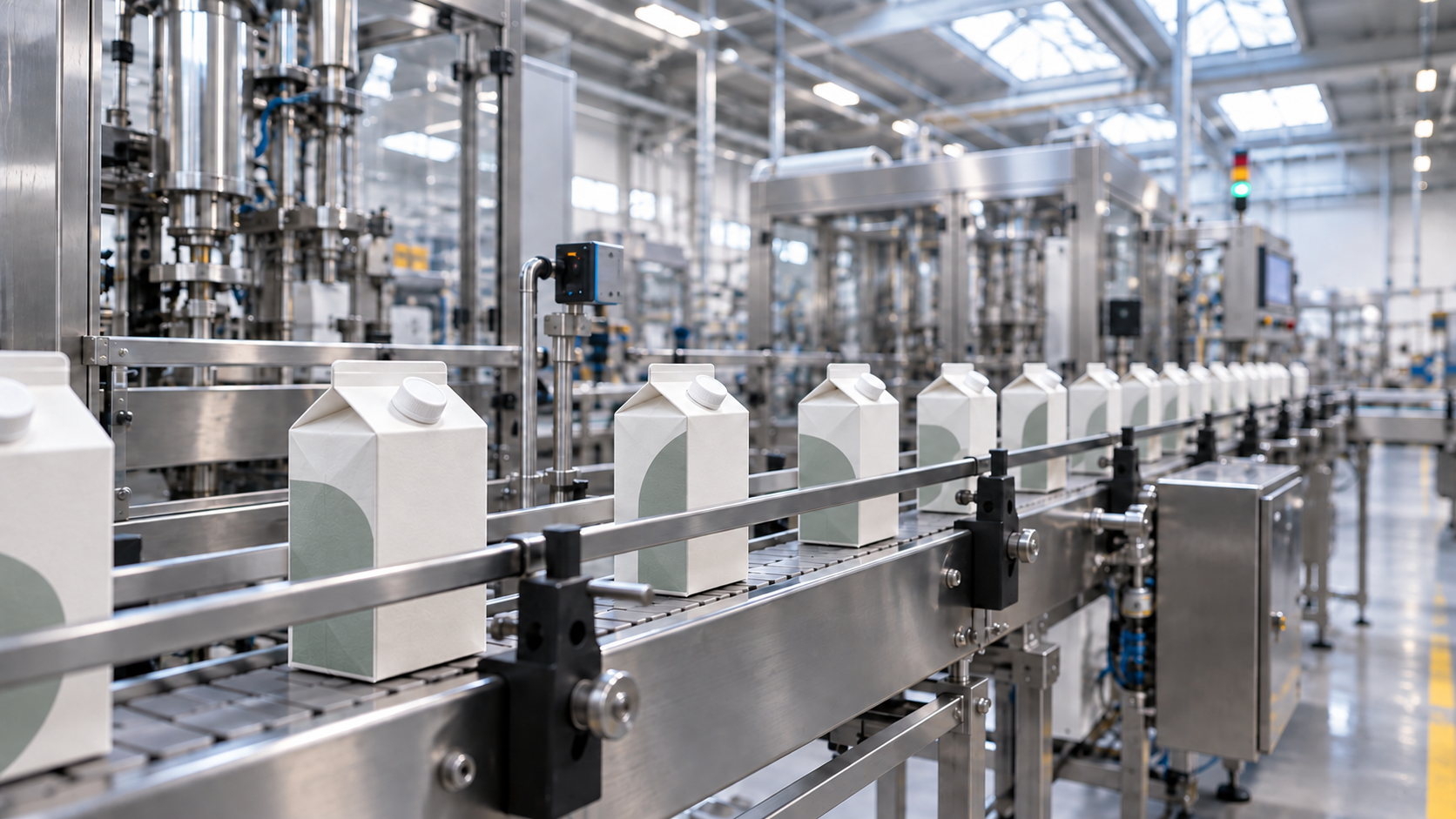
A shopfloor platform built for high-volume food and beverage production. Batch traceability, allergen checks and changeover management, without paper slowing down the line.
Faster changeovers between recipes and SKUs
Less product waste from overfill and failed quality holds
Batch linked to its raw material lot, machine and operator.
Why Composable MES matters for Food & Beverage.
Food and beverage lines run on speed and consistency, but most plants still manage the two things that matter most, changeover time and traceability, with paper and tribal knowledge.
A changeover eats twenty minutes of every shift, and nobody logs how long it actually took until the shift report gets compiled at the end of the week. By then it's too late to fix anything, it's just a number in a spreadsheet.
Allergen checks and quality checks live on paper forms in a binder next to the line. When an auditor asks for last month's records, someone spends a day finding them, and there's no way to prove a check happened at the moment it mattered.
Tracing a batch back to its raw materials means opening three systems and hoping the paper log matches what actually happened on the floor. If a recall ever comes, that gap is the difference between an hour of work and a week of it.
None of this is a technology problem. It's a visibility problem, and it's exactly what a composable MES is built to close.
How factorise solves it.
Use Cases.


How factorise solves it.
Six components.
Food & Beverage
Changeover Management
Structured, operator-guided steps per recipe or SKU switch, with a mandatory first-off quality check before the line returns to full speed. A failed check holds production automatically, no supervisor has to catch it.
Line Monitoring & OEE
Downtime detected automatically from the PLC, every stop reason-coded (jam, cleaning, changeover, breakdown) into a configurable loss tree. Pareto view by line, shift or category shows where time actually goes.
Batch Traceability
Every batch linked forward and backward to its raw material lots, including packaging materials and batches built by splitting or combining LOTs. No gaps in the chain.
Scrap & Quality Hold Tracking
Startup waste, steady-state rejects, changeover loss and rework are each categorised and tied to the order, not lumped into one generic "waste" number.
Material Management
Scan and register materials for live, accurate inventory. Step-by-step digital weighing instructions integrated with precision scales. Track every material and product movement for compliance and recall. Monitor intermediate stock in real time.
Shift Handover
The incoming shift starts with the full picture: which batch is running, what's on quality hold, what stopped and why.
A real engine, not a thin UI.
Some MES tools are just a UI layer on top of your ERP.Others force you to squeeze your recipe book into their own monolithic data model.
Factorise does neither.
At the core sits a rich Bill of Process and Bill of Materials execution engine, built for recipe-driven production. Define a formulation once, with process steps, ingredients, allergens, CIP requirements and digital work instructions. Version it, publish it, execute it.
The engine handles routing, enforces a first-off quality check after every changeover, and keeps full batch traceability end to end, including LOTs split or combined mid-run and packaging materials tracked alongside the product.
It runs stand-alone for customers without a mature ERP. It runs alongside SAP, Microsoft Dynamics or any other ERP through native connectors, so a production order and its recipe stay in sync with what planning scheduled. Your operators always work from one screen, whether they're following a formulation, logging a changeover, or clearing a quality hold.
Going paperless on quality was the goal, but what really changed is the confidence.
We know the right checks are being done, by the right person, at the right moment. For food production, that traceability isn't a nice-to-have, it's the foundation
The launchpad.
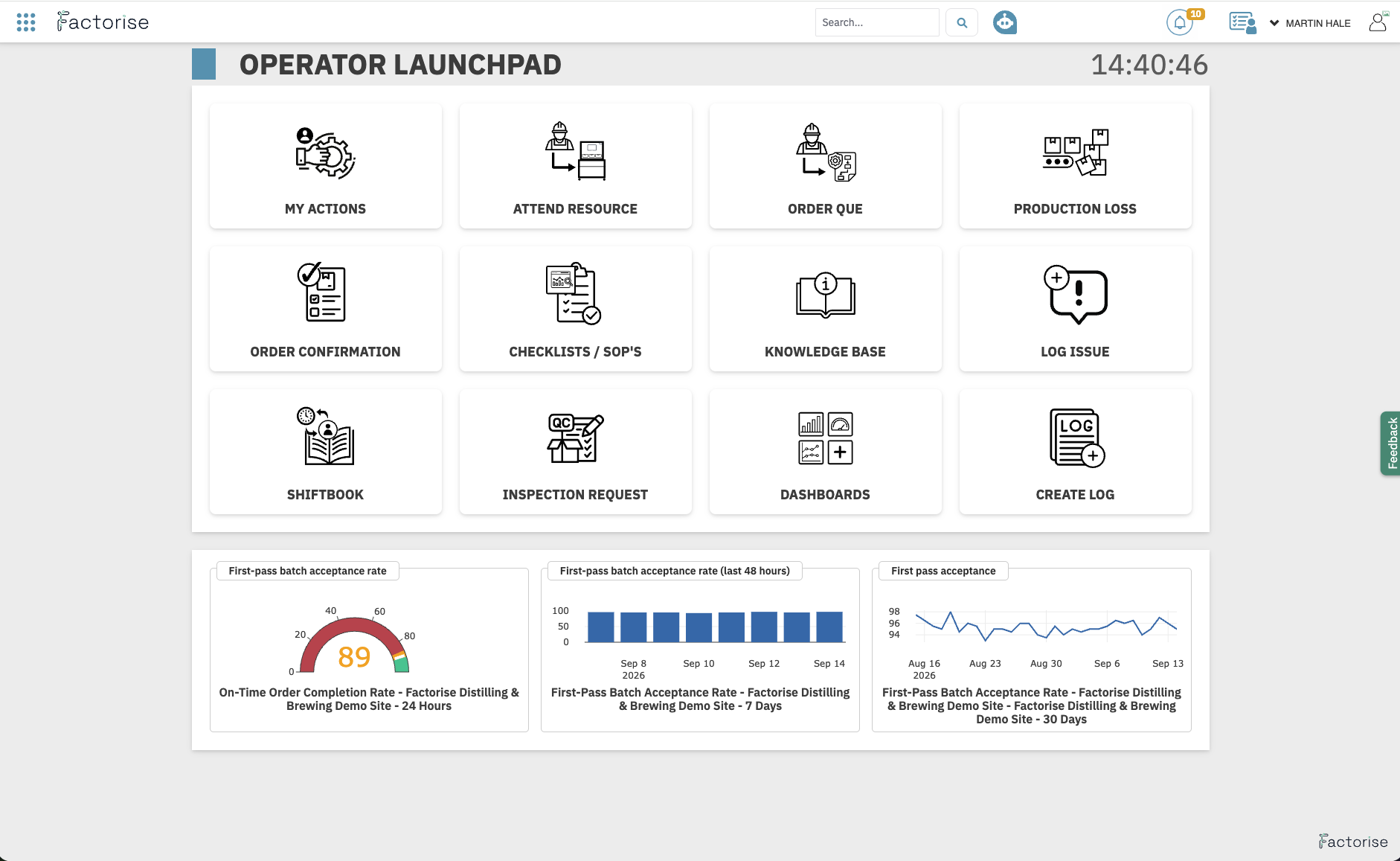
At the centre of it all is one screen: the MES Launchpad. Operators see exactly what they need for their shift, no more, no less.
The active recipe, the current changeover step, a quality hold that needs clearing, time logging, all one tap away.
Every component plugs into this same launchpad, so adding a SPC module next quarter doesn't mean training operators on a new tool. It means one new tile.
Why this approach works.
Most MES vendors sell you a monolithic system you commit to all at once, recipe management, quality, traceability, everything on day one.
Factorise lets you start where it hurts most, often changeover time or batch traceability, prove value in weeks, and add the next component when operators are ready for it. Because every component runs on the same data model and the same launchpad, adding quality checks or SPC later doesn't mean a second implementation project, it means switching on what's already there.
Built on Mendix, deployed under your own license, in your own environment. The MES grows with your production lines, not against your changeover schedule.