
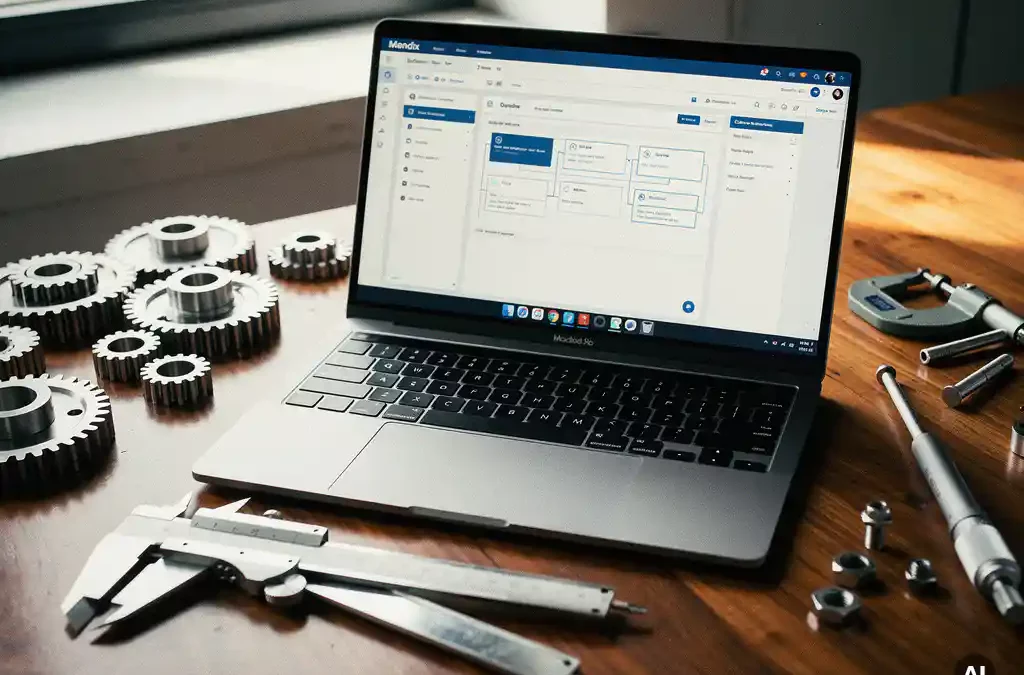
Mendix is a low-code platform that has become a cornerstone in the realm of manufacturing software. As part of Siemens, Mendix offers a robust solution for creating applications that streamline manufacturing processes. It empowers manufacturers to design, build, and maintain applications with minimal coding, making it accessible even to those without extensive programming knowledge. This capability is crucial for industries looking to digitalize their operations efficiently. In this article, we'll explore how Mendix is used in manufacturing software, its benefits, real-world applications, and future trends.
Understanding Mendix and its role in manufacturing
Mendix serves as a low-code platform that simplifies the application development process, which is particularly beneficial in the manufacturing sector. It allows companies to create custom applications tailored to their specific needs without the lengthy development cycles associated with traditional coding methods. This adaptability is essential for manufacturers who need to respond quickly to changing market demands.
In the manufacturing industry, Mendix is often used to build applications that integrate seamlessly with existing systems, such as ERP and MES platforms. This integration capability helps manufacturers optimize their operations by providing real-time data and insights. By using Mendix, companies can enhance their digital shopfloor capabilities, ensuring that their processes are not only efficient but also adaptable to future technological advancements.
How Mendix enhances manufacturing processes
Mendix enhances manufacturing processes by providing a platform where applications can be developed rapidly and iteratively. This is particularly useful for creating solutions that address specific operational challenges, such as production scheduling, inventory management, and quality control. With Mendix, manufacturers can develop applications that automate these processes, reducing the need for manual intervention and minimizing errors.
Moreover, Mendix supports the development of applications that facilitate better communication and collaboration across different departments. For example, a Mendix-based application can streamline the flow of information between the production floor and the management team, ensuring that everyone is on the same page. This improved communication can lead to more informed decision-making and a more agile response to production issues.
Key benefits of using Mendix in manufacturing software
One of the primary benefits of using Mendix in manufacturing software is its ability to accelerate the development process. By using a low-code approach, manufacturers can bring new applications to market faster than with traditional coding methods. This speed is crucial in a competitive industry where time-to-market can be a significant differentiator.
Another benefit is the platform's flexibility. Mendix allows manufacturers to adapt their applications as their needs evolve, without the need for extensive re-coding. This flexibility is supported by Mendix's integration capabilities, which enable seamless connectivity with existing systems and technologies. Additionally, manufacturers have reported typical results such as productivity boosts and cost savings, demonstrating the tangible impact of Mendix on operational efficiency.
Real-world applications of Mendix in manufacturing
Real-world applications of Mendix in manufacturing are diverse and impactful. For instance, companies have used Mendix to develop applications that monitor equipment performance in real time, helping to predict and prevent potential failures. This predictive maintenance capability can significantly reduce downtime and maintenance costs.
Another example is the use of Mendix to create applications that manage production workflows. By automating these workflows, manufacturers can ensure that production schedules are adhered to, reducing delays and improving overall efficiency. These applications also provide valuable data insights that can be used to further optimize operations and improve product quality.
Challenges and solutions in implementing Mendix
Implementing Mendix in a manufacturing environment is not without its challenges. One common issue is the integration of Mendix applications with existing legacy systems. However, Mendix's robust integration capabilities can address this challenge by allowing seamless connectivity with various systems, ensuring that data flows smoothly across the organization.
Another challenge is the need for cultural change within the organization. Adopting a new platform like Mendix requires buy-in from all levels of the organization. To overcome this, companies can focus on demonstrating the tangible benefits of Mendix, such as improved efficiency and reduced costs, to gain support from stakeholders.
Future trends of Mendix in the manufacturing sector
Looking to the future, Mendix is poised to play an even more significant role in the manufacturing sector. As manufacturers continue to embrace digital transformation, the demand for low-code platforms like Mendix is expected to grow. This growth will be driven by the need for more agile and responsive manufacturing processes.
Additionally, advancements in technologies such as artificial intelligence and the Internet of Things (IoT) will likely lead to new applications and use cases for Mendix in manufacturing. These technologies will enable manufacturers to further optimize their operations and gain deeper insights into their processes. As a result, Mendix will continue to be a valuable tool for manufacturers looking to stay competitive in an ever-evolving industry.
Ready to take the first step? We like to start with a fit-gap session: a day or two to understand where you are, which pain points are most urgent, and which modules deliver the fastest value. Book your first fit-gap session. No sales pitch. Just an honest conversation about what's realistic.
Frequently Asked Questions
How does Mendix integrate with existing manufacturing systems?
Mendix offers robust integration capabilities that allow seamless connectivity with existing systems such as ERP and MES platforms. This integration ensures smooth data flow and enhances operational efficiency by providing real-time insights.
Can Mendix be used by teams without technical expertise?
Yes, Mendix is designed as a low-code platform, making it accessible to users without extensive programming knowledge. It empowers teams to build and maintain applications with minimal coding, facilitating digital transformation across the organization.
What are the cost implications of implementing Mendix in manufacturing?
While the initial investment in Mendix may vary, many manufacturers report significant cost savings over time due to increased productivity and reduced development cycles. The platform's ability to quickly adapt to changing needs also contributes to long-term cost efficiency.
How does Mendix support agile manufacturing processes?
Mendix supports agile manufacturing by enabling rapid application development and iterative improvements. This flexibility allows manufacturers to quickly respond to market changes and optimize their processes for better efficiency and competitiveness.
What future technologies could enhance Mendix applications in manufacturing?
Future technologies such as artificial intelligence and the Internet of Things (IoT) are expected to enhance Mendix applications. These advancements will enable deeper insights into manufacturing processes and further optimization of operations.
How can companies overcome resistance to adopting Mendix?
To overcome resistance, companies should focus on demonstrating the tangible benefits of Mendix, such as improved efficiency and cost savings. Engaging stakeholders through success stories and pilot projects can also help gain organizational buy-in.
Related Articles
- How do you give management real-time visibility into production?
- What is a digital shopfloor platform?
- How does a MES improve quality in a factory?
- What is the difference between a MES and a QMS?
- How do manufacturers benchmark their own performance?
- What is lean manufacturing and how does it work?
- What is the six big losses model in manufacturing?
- How do you get more output from the same number of machines?
- What is a skill matrix in manufacturing?
- What does an audit finding related to work instructions look like?
- How do you track machine downtime in a factory?
- How to reduce downtime in manufacturing?
- How do you start measuring OEE if you have never done it before?
- What does OEE stand for?
- What is the difference between a reactive and a proactive manufacturing operation?