
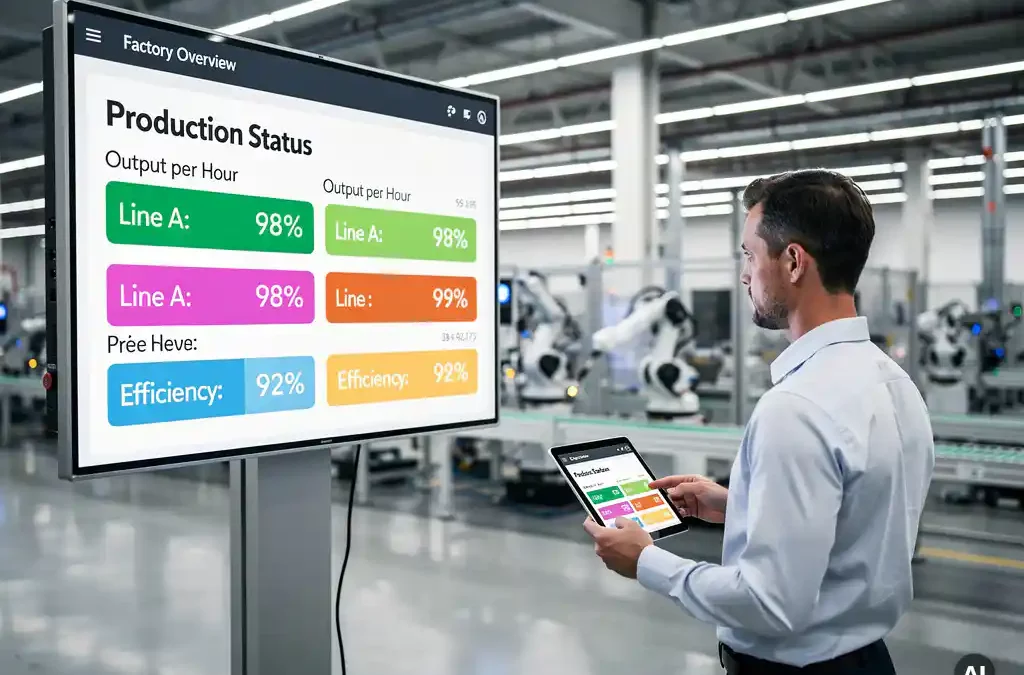
In the fast-paced world of manufacturing, having real-time visibility into production processes is crucial for effective management and decision-making. This capability allows operators, supervisors, and managers to monitor production status, identify bottlenecks, and respond to issues as they arise. The key to achieving this level of transparency lies in the use of advanced manufacturing software and digital shopfloor platforms. These tools not only provide insights into current operations but also facilitate improvements in efficiency and productivity. Let's explore how real-time visibility can transform production management and the steps needed to integrate these tools into your operations.
Understanding Real-Time Visibility in Production
Real-time visibility in production refers to the ability to monitor and analyze production processes as they happen. This means having access to live data on machine performance, production output, and potential issues. Such visibility allows for immediate adjustments and informed decision-making, which can significantly enhance production efficiency.
Manufacturing software, like the platforms built on Mendix by Factorise, offers this real-time insight. By providing a comprehensive view of the production floor, these systems help identify inefficiencies and areas for improvement. Manufacturers have reported typical results such as a 28% productivity improvement and faster response times to downtime, illustrating the tangible benefits of real-time monitoring.
Challenges in Achieving Real-Time Visibility
Despite its benefits, achieving real-time visibility poses several challenges. One major hurdle is the integration of disparate systems and data sources. Many factories still rely on outdated methods like spreadsheets and manual data entry, which can lead to inaccuracies and delays.
Another challenge is the initial cost and complexity of implementing a comprehensive digital shopfloor platform. However, the long-term benefits, such as improved productivity and cost savings, often outweigh these initial hurdles. Overcoming these challenges requires a strategic approach, focusing on gradual integration and staff training.
How Digital Shopfloor Platforms Enhance Visibility
Digital shopfloor platforms enhance visibility by consolidating data from various sources into a single, coherent view. This integration allows for real-time monitoring of key performance indicators (KPIs) such as Overall Equipment Effectiveness (OEE), machine status, and production output.
For example, Factorise's Production Cascade module visualizes OEE, output, and downtime across all lines and shifts, providing a clear picture of production efficiency. Additionally, the Andon Cockpit offers configurable live dashboards with custom KPI tiles and trend charts, enabling proactive management and faster response to issues.
Implementing MES Systems for Better Management
Manufacturing Execution Systems (MES) play a crucial role in enhancing production management. These systems provide the structure needed to enforce standard work processes, ensuring consistency and compliance across operations. By offering real-time data, MES systems enable managers to make informed decisions quickly.
Factorise's MES platform, built on Mendix, is designed to be flexible and scalable, making it suitable for midmarket manufacturers. It provides a seamless integration of various modules, such as Order Execution and Production Loss, which help streamline operations and reduce downtime.
Evaluating the Impact of Improved Visibility
Improved visibility can have a profound impact on manufacturing operations. Manufacturers typically see a 30% faster response to downtime and uncover hidden capacity, leading to significant productivity gains. Real-time insights also help in identifying and addressing the root causes of issues, preventing recurrence.
Furthermore, enhanced visibility supports continuous improvement initiatives by providing detailed data for analysis. This data-driven approach enables teams to focus on areas that offer the greatest potential for improvement, ensuring that resources are used effectively.
Steps to Integrate Real-Time Visibility Tools
Integrating real-time visibility tools into your manufacturing operations involves several key steps. First, assess your current systems and identify areas where visibility is lacking. Next, choose a digital shopfloor platform that aligns with your operational needs and budget.
Once a platform is selected, focus on a phased implementation, starting with critical areas that will deliver the fastest value. Train your staff to ensure they are comfortable using the new tools and understand the benefits of real-time data. Finally, continuously monitor and refine the system to maximize its impact on your operations.
**Ready to take the first step? We like to start with a fit-gap session: a day or two to understand where you are, which pain points are most urgent, and which modules deliver the fastest value. Book your first fit-gap session. No sales pitch. Just an honest conversation about what's realistic.**
Frequently Asked Questions
What are the key benefits of real-time visibility in manufacturing?
Real-time visibility in manufacturing allows for immediate adjustments and informed decision-making, enhancing production efficiency. It helps in identifying bottlenecks, improving productivity, and reducing downtime by providing live data on machine performance and production output.
How can manufacturers overcome the initial cost and complexity of implementing digital shopfloor platforms?
Manufacturers can overcome the initial cost and complexity by adopting a strategic approach, focusing on gradual integration and staff training. The long-term benefits, such as improved productivity and cost savings, often outweigh these initial hurdles.
What role do Manufacturing Execution Systems (MES) play in production management?
MES systems provide the structure needed to enforce standard work processes, ensuring consistency and compliance across operations. They offer real-time data that enables managers to make informed decisions quickly, streamlining operations and reducing downtime.
How do digital shopfloor platforms consolidate data for better visibility?
Digital shopfloor platforms consolidate data from various sources into a single, coherent view, allowing for real-time monitoring of key performance indicators (KPIs). This integration helps in visualizing OEE, output, and downtime, providing a clear picture of production efficiency.
What steps should be taken to ensure successful integration of real-time visibility tools?
To ensure successful integration, assess current systems to identify areas lacking visibility, choose a suitable digital shopfloor platform, implement it in phases, train staff, and continuously monitor and refine the system to maximize its impact.
How does improved visibility support continuous improvement initiatives?
Improved visibility provides detailed data for analysis, enabling teams to focus on areas with the greatest potential for improvement. This data-driven approach ensures resources are used effectively, supporting continuous improvement initiatives.
What is a fit-gap session and how does it help in integrating visibility tools?
A fit-gap session is a preliminary assessment to understand the current state, identify urgent pain points, and determine which modules deliver the fastest value. It helps in planning the integration of visibility tools without a sales pitch, focusing on realistic solutions.
Related Articles
- How do you support multiple languages on the shop floor?
- How do you build a business case for shopfloor digitalisation?
- How do you justify a MES to a board or CFO?
- What is a connected worker and what tools do they use?
- How do small and midsize manufacturers benefit from a MES?
- What is the relationship between maintenance strategy and OEE?
- What is a loss Pareto in manufacturing?
- How do you use OEE data to prioritise improvement?
- What is the difference between OEE and TEEP?
- Does the 85% OEE benchmark apply to every type of factory?
- What does OEE stand for?
- What is production efficiency in manufacturing?
- What is the difference between a reactive and a proactive manufacturing operation?
- What is quality in OEE?
- How do you measure performance losses in OEE?