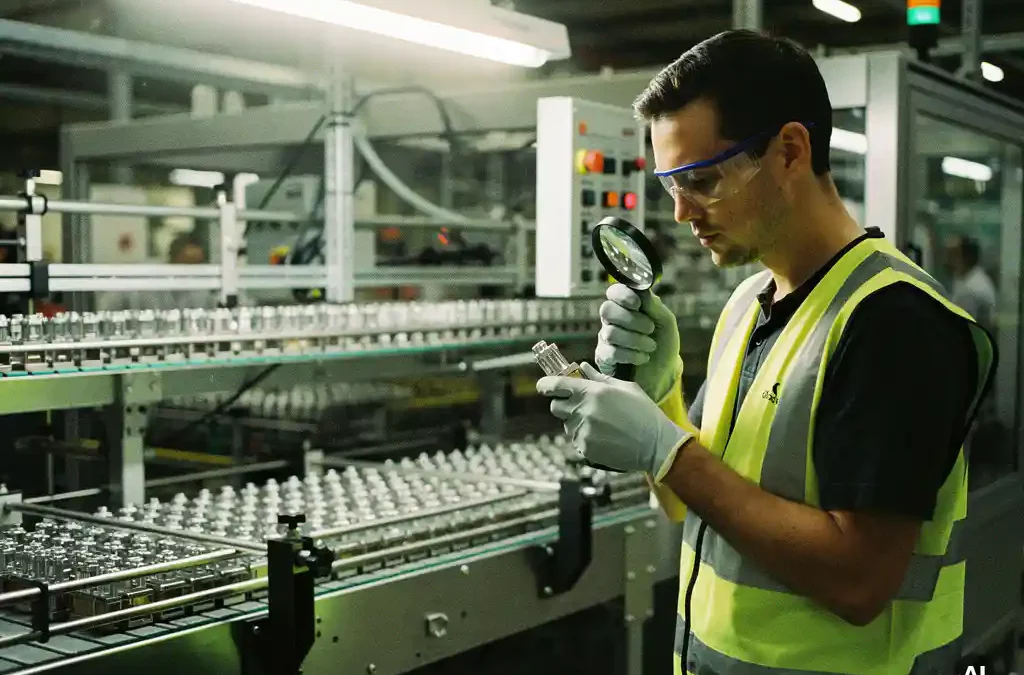
Managing non-conformances in production is crucial for maintaining high-quality standards and ensuring efficient manufacturing processes. Non-conformances, or deviations from set standards, can lead to significant production delays, increased costs, and compromised product quality. By understanding and effectively managing these issues, manufacturers can enhance their production quality control and optimize their manufacturing processes. This article explores the challenges and strategies in non-conformance management, highlighting the role of digital tools in improving shopfloor efficiency and quality assurance in manufacturing.
Understanding Non-Conformances in Production
Non-conformances in production refer to instances where products or processes fail to meet specified standards or requirements. These deviations can occur for various reasons, such as equipment malfunctions, human errors, or material defects. Identifying and addressing these issues promptly is essential to prevent them from escalating into larger problems that could disrupt production and affect product quality.
In the manufacturing sector, non-conformances are a common challenge that requires systematic management. By implementing effective non-conformance management practices, manufacturers can ensure that quality issues are detected early and resolved efficiently, minimizing their impact on production and customer satisfaction.
Common Challenges in Managing Non-Conformances
Managing non-conformances presents several challenges for manufacturers. One of the primary difficulties is the timely detection of quality issues. Traditional quality checks often occur separately from the production process, leading to delayed identification of defects. This delay can result in a significant number of products with the same defect being produced before it is detected and addressed.
Another challenge is the lack of real-time inventory tracking, which can cause production stoppages due to missing or incorrect materials. When inventory data is not updated in real-time, planners and operators may make decisions based on outdated information, leading to inefficiencies and increased costs.
Effective Strategies for Non-Conformance Management
To manage non-conformances effectively, manufacturers need to integrate quality checks into the production flow. By conducting in-line quality checks at defined points in the production process, manufacturers can catch problems at the source and reduce the cost of defects. This approach not only ensures timely detection of quality issues but also provides an audit trail for compliance in regulated industries.
Implementing a structured issue resolution process is also crucial. This involves capturing issues with clear categorization, urgency, and ownership at the moment of occurrence. Combining this with root cause analysis and action tracking creates a closed-loop problem-solving process that prevents recurring issues and enhances overall production quality.
The Role of Digital Tools in Non-Conformance Management
Digital tools play a significant role in enhancing non-conformance management. These tools provide real-time visibility into production processes, enabling manufacturers to detect and address quality issues promptly. For instance, digital shopfloor platforms like Factorise offer comprehensive solutions that integrate production execution, performance monitoring, and issue optimization, all within a unified data model.
By leveraging digital tools, manufacturers can streamline their non-conformance management processes, improve communication between teams, and ensure that quality issues are resolved efficiently. These tools also facilitate continuous improvement by providing data-driven insights that help manufacturers identify areas for optimization and implement effective solutions.
Case Study: Improving Production Quality Through Non-Conformance Management
In similar environments, teams have seen significant improvements in production quality through effective non-conformance management. For example, manufacturers have reported 40% faster issue resolution and a 60% reduction in recurring issues by implementing structured issue capture and root cause analysis processes. These improvements not only enhance product quality but also contribute to increased shopfloor efficiency and reduced production costs.
Ready to take the first step? We like to start with a fit-gap session: a day or two to understand where you are, which pain points are most urgent, and which modules deliver the fastest value. Book your first fit-gap session. No sales pitch. Just an honest conversation about what's realistic.
Frequently Asked Questions
What are some common causes of non-conformances in manufacturing?
Common causes of non-conformances include equipment malfunctions, human errors, material defects, and process deviations. Identifying these causes is crucial for implementing effective corrective actions.
How can digital tools improve non-conformance management?
Digital tools enhance non-conformance management by providing real-time visibility into production processes, enabling prompt detection and resolution of quality issues, and facilitating data-driven insights for continuous improvement.
What is the importance of integrating quality checks into the production process?
Integrating quality checks into the production process allows manufacturers to catch defects early, reducing the cost of defects and ensuring compliance with industry regulations through a clear audit trail.
How does root cause analysis contribute to non-conformance management?
Root cause analysis helps identify the underlying causes of non-conformances, allowing manufacturers to implement targeted corrective actions that prevent recurring issues and enhance overall production quality.
What role does real-time inventory tracking play in managing non-conformances?
Real-time inventory tracking ensures that production planners and operators have up-to-date information, preventing production stoppages due to missing or incorrect materials and reducing inefficiencies.
How can manufacturers ensure effective communication between teams in non-conformance management?
Manufacturers can ensure effective communication by using digital platforms that integrate production execution and performance monitoring, facilitating seamless information sharing and collaboration among teams.
What are the benefits of conducting a fit-gap session before implementing non-conformance management solutions?
A fit-gap session helps manufacturers identify urgent pain points and determine which solutions will deliver the fastest value, ensuring a tailored approach to non-conformance management that addresses specific needs.
Related Articles
- What is a digital work instruction and why does it matter?
- How do you get operator buy-in for new shopfloor software?
- How do you support multiple languages on the shop floor?
- What does a typical shopfloor digitalisation roadmap look like?
- What is the difference between a MES and a CMMS?
- How does a MES improve quality in a factory?
- What is a connected worker platform?
- How do you calculate the real cost of downtime in your factory?
- How do you improve shift handover in a factory?
- What is the role of digital tools in reducing labour dependency in manufacturing?
- What are digital work instructions in manufacturing?
- How do you onboard new manufacturing operators faster?
- What is a skill matrix in manufacturing?
- What is a connected worker and what tools do they use?
- What is MTTR in manufacturing?