
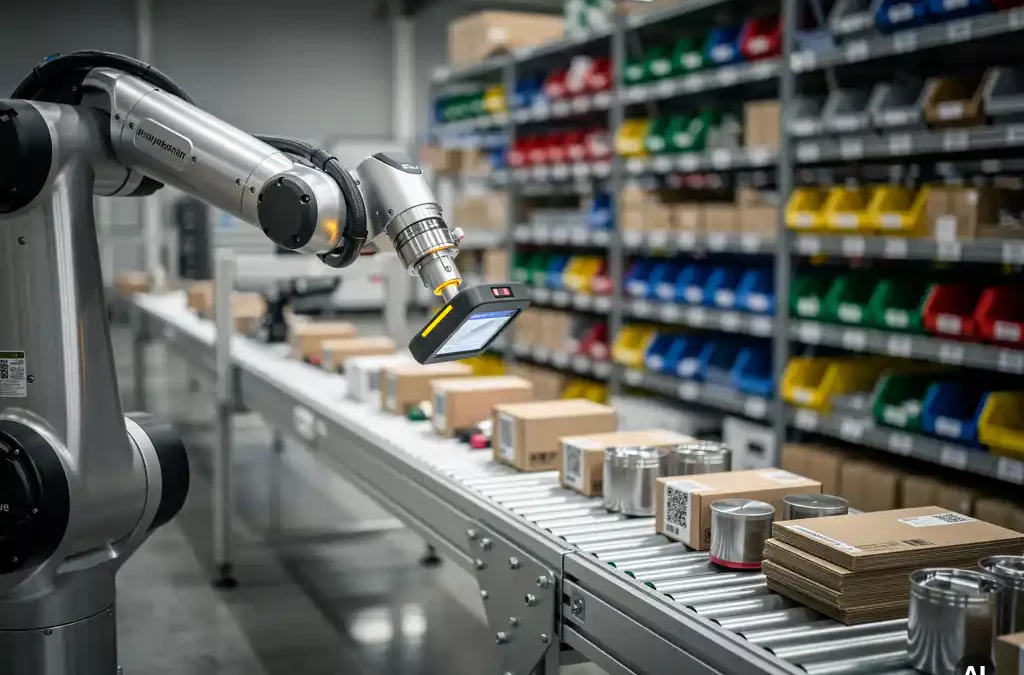
QR-code scanning has become a vital tool in the manufacturing industry, offering a seamless way to track and manage various aspects of production. This technology is instrumental in enhancing shopfloor efficiency and facilitating digital manufacturing. By integrating QR-code scanning into manufacturing processes, companies can achieve greater accuracy and speed, ultimately leading to improved productivity and reduced costs. Let's explore how QR-code technology is transforming manufacturing operations and why it's a crucial component of modern industrial automation.
Understanding QR-code technology in manufacturing
QR-code technology in manufacturing serves as a bridge between the physical and digital worlds. These codes are used to encode information that can be easily scanned and interpreted by machines, providing quick access to data. In a manufacturing setting, QR codes can be attached to products, machinery, and even documents, enabling real-time tracking and management.
By using QR codes, manufacturers can streamline operations by reducing manual data entry and minimizing errors. This technology allows for the rapid retrieval of information, which is essential for maintaining efficient production lines. Moreover, QR codes can store a significant amount of data, making them ideal for complex manufacturing environments where detailed information is crucial.
Key benefits of QR-code scanning on the shopfloor
QR-code scanning offers several benefits on the shopfloor, primarily by enhancing operational efficiency. One significant advantage is the reduction of production downtime. With QR codes, operators can quickly access machine maintenance records and operational instructions, ensuring that equipment is always in optimal condition.
Another benefit is improved inventory management. QR-code scanning provides accurate, real-time data on stock levels, helping prevent production stoppages due to material shortages. This visibility into inventory helps manufacturers maintain a smooth production flow and avoid costly delays.
How QR-code scanning enhances production execution
Incorporating QR-code scanning into production execution processes allows for better control and monitoring of manufacturing activities. By scanning QR codes, operators can confirm that the correct materials are used at each stage of production, reducing the risk of errors and ensuring product quality.
Additionally, QR codes facilitate seamless communication between different production stages. As products move through the manufacturing process, QR codes can be scanned to update their status, providing a live overview of production progress. This transparency helps managers make informed decisions and quickly address any issues that arise.
Real-world applications of QR-code scanning in factories
QR-code scanning is used in various real-world applications within factories. For example, it plays a crucial role in quality control by enabling in-line quality checks. Operators can scan QR codes to verify that products meet specific standards before they proceed to the next production phase.
Another application is in workforce management. QR codes can be used to track employee attendance and productivity, ensuring that the right personnel are assigned to the correct tasks. This capability helps optimize labor resources and improve overall efficiency.
Overcoming challenges with QR-code implementation in manufacturing
While QR-code technology offers numerous benefits, its implementation in manufacturing can present challenges. One common issue is the integration of QR-code systems with existing manufacturing execution systems (MES). Ensuring seamless connectivity between these systems is crucial for maximizing the benefits of QR-code scanning.
Another challenge is the need for proper training. Operators must be adequately trained to use QR-code scanning devices effectively. Providing comprehensive training programs can help overcome this hurdle and ensure that employees are comfortable with the technology.
Future trends in QR-code technology for industrial use
As we look to the future, QR-code technology is expected to evolve and offer even more capabilities for industrial use. One emerging trend is the integration of QR codes with the Internet of Things (IoT). This combination can provide manufacturers with enhanced data analytics and predictive maintenance capabilities.
Additionally, advancements in QR-code technology may lead to more robust security features, protecting sensitive manufacturing data from unauthorized access. As these trends develop, QR-code scanning will continue to play a pivotal role in driving innovation in the manufacturing sector.
Why QR-code scanning is a game-changer for digital manufacturing
QR-code scanning is a transformative tool for digital manufacturing, offering a simple yet powerful way to enhance operational efficiency. By providing real-time data access and improving communication across production lines, QR codes help manufacturers achieve greater accuracy and speed.
At Factorise, we understand the importance of integrating advanced technologies like QR-code scanning into manufacturing processes. Our digital shopfloor platform is designed to support these innovations, helping manufacturers streamline operations and achieve significant productivity gains. **Explore our digital manufacturing solutions** to discover how we can help your business thrive in the digital age.
Ready to take the first step? We like to start with a fit-gap session: a day or two to understand where you are, which pain points are most urgent, and which modules deliver the fastest value. **Book your first fit-gap session**. No sales pitch. Just an honest conversation about what's realistic.
Frequently Asked Questions
How does QR-code scanning improve accuracy in manufacturing?
QR-code scanning improves accuracy by reducing manual data entry errors and ensuring that the correct materials and instructions are used at each production stage. This minimizes mistakes and enhances product quality.
What are the common challenges faced during QR-code implementation in manufacturing?
Common challenges include integrating QR-code systems with existing manufacturing execution systems (MES) and ensuring that operators are adequately trained to use the technology effectively.
Can QR codes be used for inventory management in manufacturing?
Yes, QR codes can significantly enhance inventory management by providing real-time data on stock levels, helping to prevent production stoppages due to material shortages and ensuring a smooth production flow.
What role do QR codes play in quality control within factories?
In quality control, QR codes enable in-line quality checks by allowing operators to verify that products meet specific standards before proceeding to the next production phase, thus ensuring consistent product quality.
How can QR-code technology be integrated with the Internet of Things (IoT)?
QR-code technology can be integrated with IoT to provide enhanced data analytics and predictive maintenance capabilities, allowing manufacturers to monitor equipment health and optimize production processes.
What future trends are expected in QR-code technology for manufacturing?
Future trends include the integration of QR codes with IoT for better data analytics, advancements in security features to protect manufacturing data, and enhanced capabilities for predictive maintenance.
How can manufacturers ensure successful QR-code system integration?
Manufacturers can ensure successful integration by conducting thorough assessments of existing systems, providing comprehensive training for employees, and working with experienced technology partners to facilitate seamless connectivity.
Related Articles
- How do you avoid shadow IT on the shop floor?
- What is a composable MES and why does it matter?
- What does a typical shopfloor digitalisation roadmap look like?
- What is a control tower in manufacturing operations?
- What is the difference between a MES and a QMS?
- What is the role of data in improving manufacturing performance?
- What is lean manufacturing and how does it work?
- What is lean daily management in manufacturing?
- What information do you need to start reducing machine downtime?
- What is the role of digital tools in reducing labour dependency in manufacturing?
- What does version control in work instructions mean in practice?
- What is a connected worker and what tools do they use?
- What is the relationship between maintenance strategy and OEE?
- How do you track machine downtime in a factory?
- What is MTBF and how do you calculate it?