
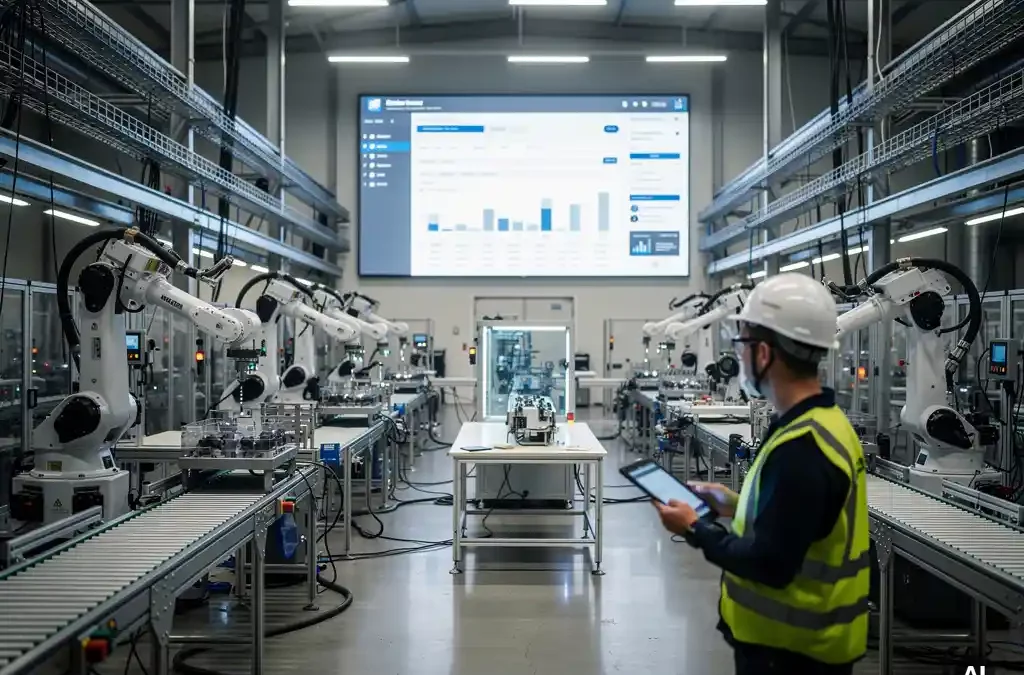
ISA-88 is a critical standard that structures the way factories operate, particularly in batch manufacturing environments. It provides a framework for organizing equipment and managing batch processes, ensuring consistency and efficiency in production. This standard is especially important for industries like food, pharmaceuticals, and chemicals, where precise control over production processes is crucial. Understanding ISA-88 can help manufacturers streamline operations and improve overall productivity.
Understanding ISA-88 and its importance
ISA-88, also known as IEC 61512, is a standard that defines models and terminology for batch control. It is essential because it provides a structured approach to managing batch processes, which are prevalent in many manufacturing sectors. By standardizing the way equipment and processes are described, ISA-88 helps ensure that production is consistent and repeatable.
The importance of ISA-88 lies in its ability to enhance communication between different parts of the manufacturing process. By using a common language and structure, it reduces misunderstandings and errors, leading to more efficient operations. This standard is particularly relevant in industries where precision and repeatability are critical, such as pharmaceuticals and food production.
Key components of ISA-88
ISA-88 is composed of several key components that define how a factory is structured. These include the physical model, which describes the hierarchy of equipment, and the procedural model, which outlines how processes are executed. Together, these models provide a comprehensive framework for managing batch processes.
The physical model of ISA-88 includes elements such as enterprise, site, area, process cell, unit, equipment module, and control module. Each of these elements plays a specific role in the production process, ensuring that operations are well-organized and efficient. The procedural model, on the other hand, focuses on the execution of processes, providing guidelines for developing batch recipes and managing production sequences.
How ISA-88 structures a factory
ISA-88 structures a factory by defining a clear hierarchy of equipment and processes. This hierarchy starts at the enterprise level and cascades down to individual control modules. By organizing equipment and processes in this way, ISA-88 ensures that production is both efficient and flexible.
This structured approach allows manufacturers to easily manage complex production environments. For example, in a pharmaceutical plant, ISA-88 can help streamline the production of different drugs by ensuring that equipment and processes are consistently organized and controlled. This not only improves efficiency but also helps maintain high standards of quality and safety.
Benefits of implementing ISA-88 in manufacturing
Implementing ISA-88 in manufacturing offers several benefits, including improved consistency, efficiency, and flexibility. By providing a standardized framework for managing batch processes, ISA-88 helps ensure that production is consistent and repeatable, reducing the risk of errors and defects.
Additionally, ISA-88 enhances flexibility by allowing manufacturers to easily adapt to changes in production requirements. This is particularly important in industries where product demand can fluctuate rapidly. By using ISA-88, manufacturers can quickly adjust their processes to meet changing needs, ensuring that they remain competitive in the market.
Challenges in adopting ISA-88
While ISA-88 offers many benefits, adopting this standard can also present challenges. One of the main obstacles is the need for significant changes in existing processes and systems. Implementing ISA-88 often requires a substantial investment in time and resources, as manufacturers must update their equipment and processes to align with the standard.
Another challenge is the need for training and education. To successfully implement ISA-88, manufacturers must ensure that their staff are familiar with the standard and understand how to apply it in their daily operations. This can be a time-consuming process, particularly for companies with large and complex production environments.
ISA-88 and digital transformation
ISA-88 plays a crucial role in digital transformation by providing a structured framework for integrating new technologies into manufacturing processes. By standardizing the way equipment and processes are described, ISA-88 makes it easier for manufacturers to adopt digital tools and technologies, such as Manufacturing Execution Systems (MES) and Industrial Internet of Things (IIoT) solutions.
For companies like us at Factorise, which offer digital shopfloor platforms, ISA-88 provides a foundation for developing and implementing advanced manufacturing solutions. By leveraging the standard's framework, we can help manufacturers enhance their operations and achieve greater levels of efficiency and productivity.
Future trends in ISA-88 and manufacturing
As manufacturing continues to evolve, ISA-88 is expected to play an increasingly important role in shaping the future of the industry. One of the key trends is the integration of ISA-88 with other standards, such as ISA-95, to create a more comprehensive framework for managing production processes.
Additionally, as digital technologies become more prevalent, ISA-88 will likely be adapted to support new innovations, such as artificial intelligence and machine learning. These technologies have the potential to further enhance the efficiency and flexibility of manufacturing processes, allowing manufacturers to remain competitive in an ever-changing market.
Ready to take the first step? We like to start with a fit-gap session: a day or two to understand where you are, which pain points are most urgent, and which modules deliver the fastest value. Book your first fit-gap session. No sales pitch. Just an honest conversation about what's realistic.
Frequently Asked Questions
What is the primary purpose of ISA-88 in manufacturing?
ISA-88 provides a structured framework for organizing equipment and managing batch processes, ensuring consistency and efficiency in production, particularly in batch manufacturing environments.
How does ISA-88 improve communication in manufacturing processes?
ISA-88 enhances communication by providing a common language and structure, reducing misunderstandings and errors between different parts of the manufacturing process.
What are some industries that benefit most from ISA-88?
Industries such as food, pharmaceuticals, and chemicals benefit significantly from ISA-88 due to their need for precise control over production processes.
What challenges might a company face when implementing ISA-88?
Challenges include the need for significant changes in existing processes and systems, substantial investment in time and resources, and the requirement for staff training and education.
How does ISA-88 support digital transformation in manufacturing?
ISA-88 supports digital transformation by providing a structured framework for integrating new technologies, making it easier to adopt tools like Manufacturing Execution Systems (MES) and Industrial Internet of Things (IIoT) solutions.
What future trends are expected for ISA-88 in the manufacturing industry?
Future trends include the integration of ISA-88 with other standards like ISA-95 and adaptations to support new technologies such as artificial intelligence and machine learning.
How can a company get started with implementing ISA-88?
Companies can start by conducting a fit-gap session to understand their current processes, identify urgent pain points, and determine which modules will deliver the fastest value.
Related Articles
- How do you reduce hidden capacity loss in a factory?
- What is a Bill of Process and how does it differ from a BOM?
- What is a digital twin in manufacturing?
- What is cross-site benchmarking in manufacturing?
- What is Industry 4.0 and what does it mean in practice?
- What is the difference between a MES and a CMMS?
- What is the difference between a MES and a QMS?
- How do you use an OEE calculator on the shop floor?
- What is lean daily management in manufacturing?
- What is the six big losses model in manufacturing?
- What is the difference between planned and unplanned downtime?
- What is the average OEE in manufacturing?
- What is the difference between OEE and TEEP?
- How do you measure performance losses in OEE?
- What are the three components of OEE?