
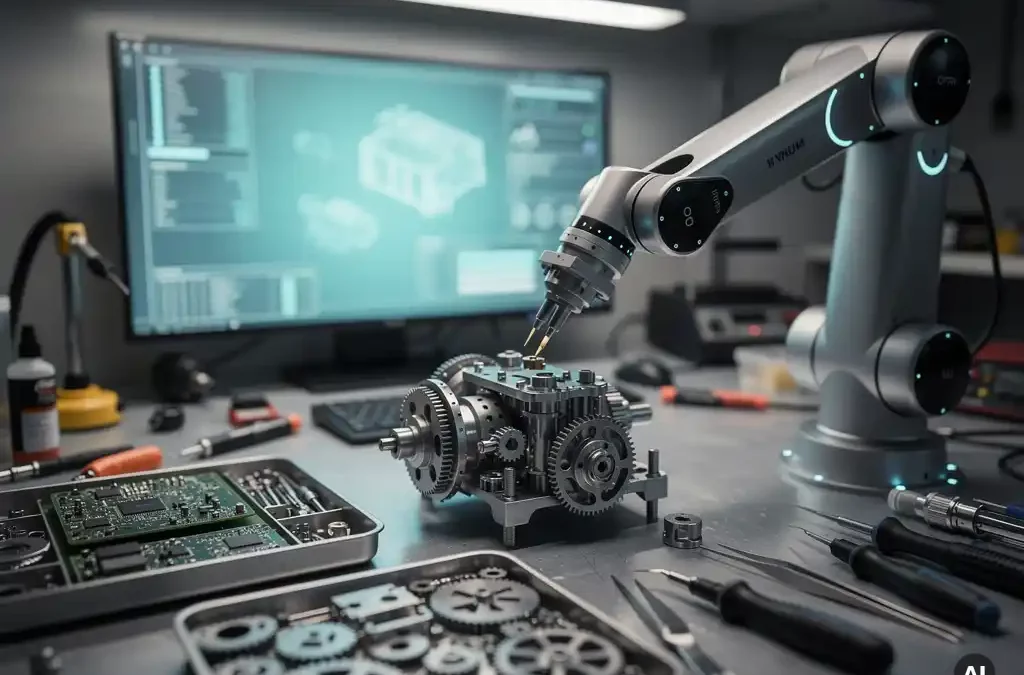
Industry 4.0 represents a transformative shift in manufacturing, integrating advanced technologies to create smart factories and enhance digital manufacturing processes. This new era leverages industrial IoT, artificial intelligence, and automation to optimize production, improve efficiency, and foster innovation. As we navigate 2026, understanding Industry 4.0 and its practical implications is crucial for manufacturers looking to stay competitive and relevant in the ever-evolving industrial landscape.
Understanding Industry 4.0
Industry 4.0 marks the fourth industrial revolution, characterized by the fusion of digital technologies with traditional manufacturing processes. At its core, it involves the use of interconnected devices and systems that communicate and collaborate to enhance production capabilities. This paradigm shift is driven by the need for greater efficiency, flexibility, and customization in manufacturing.
For manufacturers, Industry 4.0 means adopting technologies that enable real-time data collection and analysis, leading to more informed decision-making. The integration of cyber-physical systems, IoT, and cloud computing allows for seamless communication across various production stages, resulting in smarter, more agile operations. This connectivity transforms factories into intelligent environments where machines and systems can autonomously manage tasks, reducing human intervention and error.
Key Technologies Driving Industry 4.0
Several key technologies underpin Industry 4.0, each contributing to its transformative potential. The industrial IoT is pivotal, connecting machines and devices to a centralized system for data exchange and analysis. This connectivity enables predictive maintenance, reducing downtime and extending equipment lifespan. Additionally, artificial intelligence and machine learning algorithms analyze data to optimize production processes and enhance quality control.
Another critical technology is additive manufacturing, or 3D printing, which allows for rapid prototyping and customization of products. This capability not only speeds up production but also reduces waste and material costs. Robotics and automation further enhance efficiency by performing repetitive tasks with precision and consistency. These technologies collectively create a smart manufacturing environment where data-driven insights lead to continuous improvement and innovation.
Benefits of Industry 4.0 for Manufacturers
Industry 4.0 offers numerous benefits for manufacturers, from increased productivity to enhanced product quality. By leveraging real-time data, manufacturers can identify inefficiencies and implement corrective measures swiftly, leading to significant cost savings. For instance, manufacturers have reported a 28% productivity improvement and 20% cost savings through the adoption of digital manufacturing technologies.
Moreover, Industry 4.0 facilitates better resource management and sustainability. With precise monitoring and control, manufacturers can minimize waste and optimize energy consumption. This not only reduces operational costs but also aligns with global sustainability goals. Enhanced connectivity and data analytics also improve supply chain visibility, enabling manufacturers to respond quickly to market demands and reduce lead times.
Challenges in Implementing Industry 4.0
Despite its benefits, implementing Industry 4.0 poses several challenges. One of the primary hurdles is the integration of legacy systems with new technologies. Many manufacturers still rely on outdated equipment that lacks the connectivity required for Industry 4.0. Bridging this gap often involves significant investment in retrofitting or replacing equipment, which can be cost-prohibitive for some businesses.
Additionally, the shift to Industry 4.0 requires a cultural change within organizations. Employees must adapt to new technologies and workflows, necessitating comprehensive training and change management strategies. Data security is another concern, as increased connectivity exposes manufacturers to potential cyber threats. Implementing robust cybersecurity measures is essential to protect sensitive data and maintain operational integrity.
Real-World Applications of Industry 4.0
Industry 4.0 is already making a tangible impact across various sectors. In automotive manufacturing, for example, smart factories utilize IoT and robotics to streamline assembly lines, resulting in faster production cycles and reduced errors. Similarly, the pharmaceutical industry leverages real-time data analytics to ensure product quality and compliance with regulatory standards.
In the aerospace sector, predictive maintenance enabled by IoT sensors helps airlines minimize aircraft downtime and optimize fleet operations. These real-world applications demonstrate how Industry 4.0 technologies enhance efficiency, reduce costs, and improve product quality across diverse industries.
How to Get Started with Industry 4.0
Embarking on the Industry 4.0 journey requires a strategic approach. Start by assessing your current operations to identify areas where digital manufacturing technologies can deliver the most value. Consider conducting a pilot project to test new technologies and processes on a small scale before full-scale implementation.
Collaboration with technology partners can provide valuable insights and support throughout the transition. For instance, digital manufacturing platforms can offer tailored solutions that align with your specific needs and goals. Ready to take the first step? We like to start with a fit-gap session: a day or two to understand where you are, which pain points are most urgent, and which modules deliver the fastest value. Book your first fit-gap session. No sales pitch. Just an honest conversation about what's realistic.
Frequently Asked Questions
What are the initial steps for a small manufacturer to adopt Industry 4.0?
Small manufacturers should start by evaluating their current processes to identify areas where digital technologies can add value. Conducting a small-scale pilot project can help test new technologies and determine feasibility before a full-scale implementation.
How can manufacturers ensure data security in Industry 4.0 environments?
Manufacturers can enhance data security by implementing robust cybersecurity measures, such as encryption, firewalls, and regular security audits. Training employees on best practices for data protection is also crucial to safeguarding sensitive information.
What role does employee training play in the transition to Industry 4.0?
Employee training is vital for a successful transition to Industry 4.0, as it helps staff adapt to new technologies and workflows. Comprehensive training programs should focus on both technical skills and change management to ensure a smooth transition.
How does Industry 4.0 impact supply chain management?
Industry 4.0 improves supply chain management by enhancing visibility and allowing for real-time tracking of goods. This leads to better demand forecasting, reduced lead times, and more efficient resource allocation.
What are some cost-effective ways to integrate legacy systems with Industry 4.0 technologies?
To integrate legacy systems cost-effectively, manufacturers can consider retrofitting existing equipment with IoT sensors and connectivity modules. Collaborating with technology partners can also provide tailored solutions that minimize costs.
How can Industry 4.0 contribute to sustainability efforts?
Industry 4.0 contributes to sustainability by optimizing resource use, reducing waste, and improving energy efficiency. These improvements align with global sustainability goals and can lead to significant cost savings for manufacturers.
What are the potential risks of not adopting Industry 4.0 technologies?
Manufacturers who do not adopt Industry 4.0 technologies risk falling behind competitors, experiencing decreased efficiency, and facing higher operational costs. Staying competitive requires embracing digital transformation to meet evolving market demands.
Related Articles
- What is mobile-first design and why does it matter for operators?
- How do you avoid shadow IT on the shop floor?
- How do you integrate SAP with a shopfloor system?
- What does a typical shopfloor digitalisation roadmap look like?
- Which manufacturers need a MES?
- What is the role of digital tools in reducing labour dependency in manufacturing?
- How do you prevent knowledge loss when key employees retire?
- What are digital work instructions in manufacturing?
- What does version control in work instructions mean in practice?
- What is the role of AI in helping operators troubleshoot problems?
- What is the difference between preventive and predictive maintenance?
- What is preventive maintenance in manufacturing?
- What is the difference between OEE and TEEP?
- Why is 85% OEE considered world-class?
- How do you solve recurring problems on the shopfloor?