
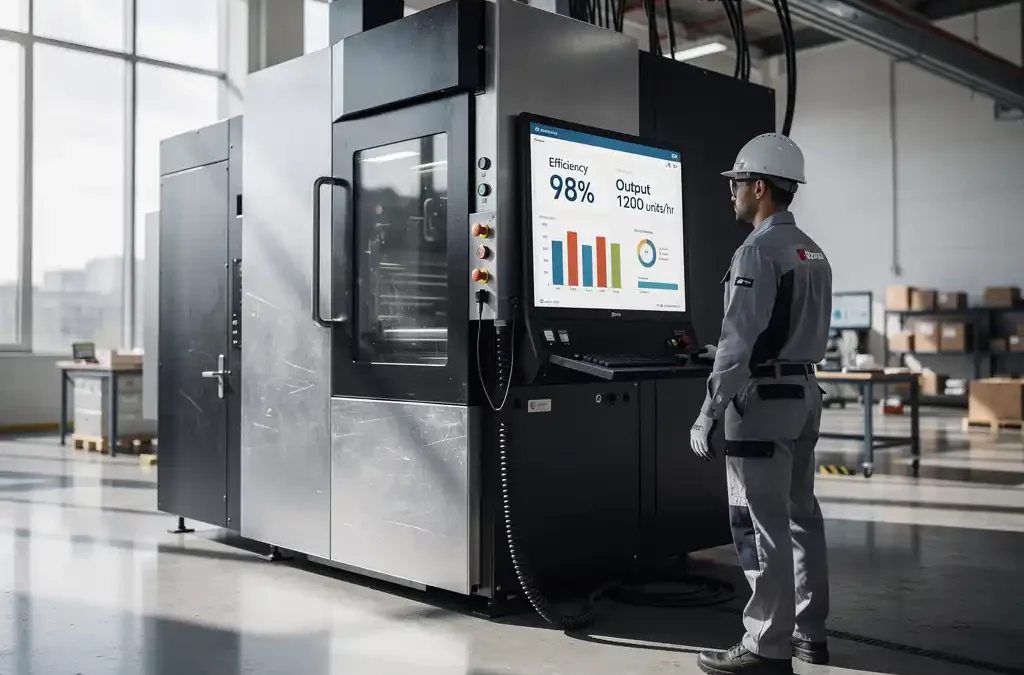
Overall Equipment Effectiveness (OEE) is a comprehensive metric that evaluates the efficiency of manufacturing processes by combining three critical components: Availability, Performance, and Quality. It provides a percentage score that indicates how effectively a machine or production line is utilized compared to its full potential. Understanding OEE is crucial for identifying inefficiencies and improving productivity on the shop floor.
What is Overall Equipment Effectiveness (OEE) and why is it important?
Overall Equipment Effectiveness (OEE) is a key performance indicator used to measure the efficiency and effectiveness of manufacturing equipment. It is important because it helps manufacturers identify areas for improvement by highlighting losses in production processes. OEE provides insights into how well equipment is utilized, allowing for data-driven decisions to enhance productivity.
OEE is calculated by multiplying three factors: Availability, Performance, and Quality. Each factor addresses a specific aspect of production efficiency, making OEE a comprehensive measure. By focusing on these components, manufacturers can pinpoint where losses occur and implement strategies to optimize operations. This metric is essential for achieving world-class manufacturing standards and maintaining a competitive advantage.
What are the three components of OEE?
The three components of OEE are Availability, Performance, and Quality. Each component plays a vital role in determining the overall efficiency of manufacturing equipment.
- Availability: Measures the percentage of scheduled time that the equipment is available for production. It accounts for unplanned downtime and equipment failures.
- Performance: Assesses whether the equipment is running at its maximum speed when it is available. It considers speed losses and minor stoppages.
- Quality: Evaluates the proportion of good units produced compared to the total units started. It focuses on defects and rework.
By analyzing these components, manufacturers can identify specific areas that require attention and take targeted actions to improve overall equipment effectiveness.
How do you calculate OEE?
OEE is calculated by multiplying the percentages of Availability, Performance, and Quality. The formula is: OEE = Availability × Performance × Quality. Each component is expressed as a percentage, and the final OEE score provides a clear picture of how well the equipment is performing.
To calculate each component:
- Availability: (Operating Time / Planned Production Time) × 100
- Performance: (Actual Output / Maximum Possible Output) × 100
- Quality: (Good Units / Total Units Produced) × 100
By using this formula, manufacturers can track and improve their production processes, leading to increased efficiency and reduced operational costs.
Why might OEE scores be low and how can they be improved?
OEE scores might be low due to factors such as frequent equipment breakdowns, slow production speeds, and high defect rates. To improve OEE, manufacturers can focus on reducing downtime, optimizing production speeds, and enhancing product quality.
Strategies for improvement include implementing preventive maintenance programs to minimize unplanned downtime, using real-time monitoring systems to track performance, and conducting regular quality checks to reduce defects. Additionally, training operators and standardizing processes can help maintain consistent production speeds and quality.
How does OEE impact manufacturing performance?
OEE directly impacts manufacturing performance by providing insights into equipment utilization and identifying areas for improvement. A high OEE score indicates efficient use of resources, leading to increased productivity and reduced costs. Conversely, a low OEE score highlights inefficiencies that need to be addressed.
By focusing on OEE, manufacturers can enhance their operational efficiency, reduce waste, and improve overall production quality. This, in turn, leads to better customer satisfaction and a stronger competitive position in the market.
What tools can help in tracking and improving OEE?
Tools such as real-time monitoring systems, data analytics platforms, and maintenance management software can help track and improve OEE. These tools provide actionable insights into equipment performance and facilitate data-driven decision-making.
For instance, Factorise’s digital shopfloor platform offers comprehensive solutions for tracking OEE by integrating with existing systems and providing real-time data visibility. This enables manufacturers to identify inefficiencies quickly and implement corrective actions effectively.
Ready to take the first step? Book your first fit-gap session. No sales pitch. Just an honest conversation about what’s realistic.
Related Articles
- How do you choose between buying and building shopfloor software?
- How do you integrate SAP with a shopfloor system?
- How long does it take to go live with a shopfloor platform?
- Why does shift handover cause production losses?
- What is the role of data in improving manufacturing performance?
- What is availability in OEE?
- What is the role of digital tools in reducing labour dependency in manufacturing?
- Why is tribal knowledge a risk for a manufacturing business?
- How do digital work instructions differ from paper SOPs?
- What is the manufacturing skills gap and why is it getting worse?
- What is the difference between planned and unplanned downtime?
- How do you improve OEE in manufacturing?
- What causes low OEE in a factory?
- How do you measure performance losses in OEE?
- Why is the OEE number in most factories inaccurate?