
“`html
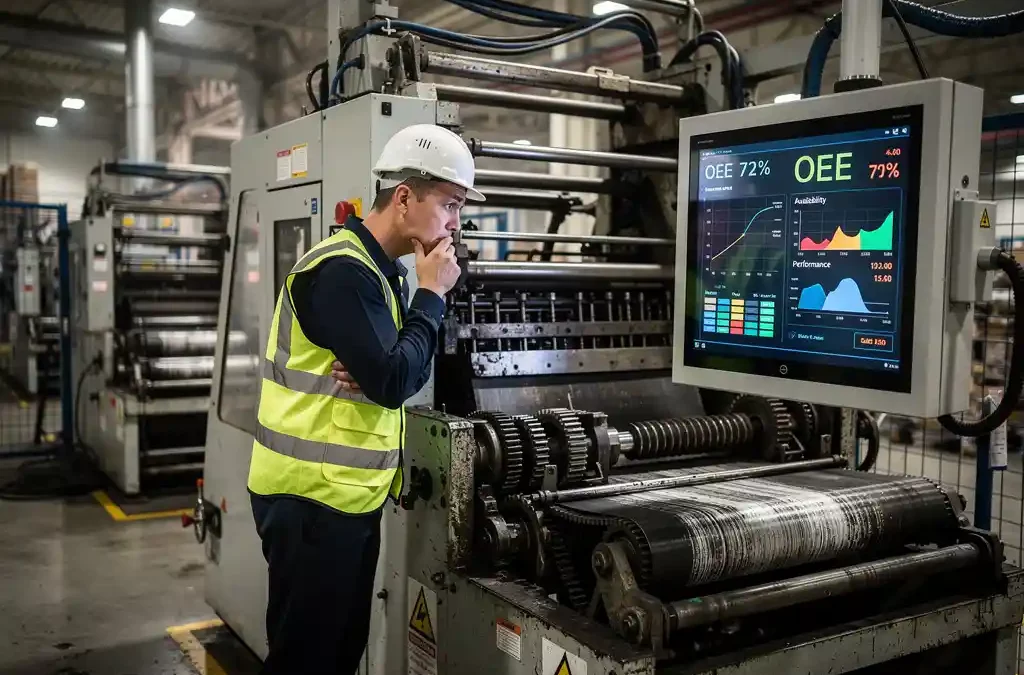
OEE numbers in most factories are often inaccurate due to inconsistent calculation methods and a lack of real-time data. Many factories use custom calculations instead of the ISO 22400 standard, leading to discrepancies. Additionally, reliance on manual data entry and end-of-shift reporting can skew results. This article explores why these inaccuracies occur and how they can be addressed.
What is OEE and why is it important?
OEE, or Overall Equipment Effectiveness, is a key performance indicator in manufacturing that measures the efficiency of production processes. It is important because it provides a clear picture of how effectively a manufacturing operation is running, helping identify areas for improvement. OEE combines three factors: Availability, Performance, and Quality, to give a comprehensive view of production efficiency.
By understanding OEE, manufacturers can pinpoint losses, optimize processes, and improve productivity. It serves as a benchmark for operational excellence and is crucial for maintaining a competitive advantage in the manufacturing sector.
How is OEE calculated in factories?
OEE is calculated by multiplying three components: Availability, Performance, and Quality. Each component is a percentage that reflects a different aspect of production efficiency. The formula is: OEE = Availability × Performance × Quality.
Availability measures the percentage of scheduled time that the equipment is available for production. Performance assesses whether the equipment is running at its maximum speed. Quality evaluates the proportion of good parts produced. Using the ISO 22400 standard ensures consistency and comparability across different sites.
Why do many factories report inaccurate OEE numbers?
Many factories report inaccurate OEE numbers due to custom calculation methods and outdated data collection practices. Often, factories develop their own formulas, deviating from the ISO 22400 standard, which leads to inconsistencies. Additionally, manual data entry and reliance on end-of-shift reports introduce errors and delays.
Without real-time data, factories struggle to capture accurate performance metrics. This results in decisions based on incomplete or incorrect information, hindering effective process improvements and operational efficiency.
What are the consequences of inaccurate OEE data?
Inaccurate OEE data can lead to misguided decision-making, inefficiencies, and missed opportunities for improvement. When OEE numbers are unreliable, factories may invest resources in the wrong areas, overlook critical issues, and fail to achieve desired productivity gains.
This can result in increased operational costs, reduced competitiveness, and a lack of trust in performance metrics. Ultimately, inaccurate data undermines efforts to optimize manufacturing processes and achieve world-class OEE standards.
How can factories improve OEE accuracy?
Factories can improve OEE accuracy by standardizing calculations, implementing real-time data collection, and using mobile-first, operator-friendly interfaces. Adopting the ISO 22400 standard ensures consistency across sites, while real-time monitoring eliminates delays and errors associated with manual reporting.
Using QR/barcode-driven data entry and phased rollouts of digital solutions can further enhance accuracy. These measures help operators focus on value-added tasks rather than data entry, leading to more reliable OEE tracking and informed decision-making.
What role does technology play in enhancing OEE accuracy?
Technology plays a crucial role in enhancing OEE accuracy by providing real-time data, streamlining data entry, and connecting disparate systems. Digital solutions enable continuous monitoring of production processes, allowing for immediate identification and resolution of issues.
Mobile-first designs and multilingual interfaces ensure that operators can easily interact with systems, improving adoption and data accuracy. By integrating with existing ERP and OT systems, technology bridges the gap between data collection and actionable insights, supporting effective OEE improvement strategies.
Should factories invest in digital solutions for OEE accuracy?
Yes, factories should invest in digital solutions to improve OEE accuracy, as they provide real-time insights, standardize data collection, and enhance operational efficiency. Digital platforms like Factorise offer modular solutions that can be tailored to address specific manufacturing challenges, ensuring a scalable and flexible approach to digitalization.
Investing in these solutions allows manufacturers to achieve quick wins, such as productivity boosts and cost savings, while building a foundation for long-term operational excellence. Explore digital manufacturing solutions to see typical results in similar deployments.
Ready to take the first step? We like to start with a fit-gap session: a day or two to understand where you are, which pain points are most urgent, and which modules deliver the fastest value. Book your first fit-gap session. No sales pitch. Just an honest conversation about what’s realistic.
“`
Related Articles
- What is mobile-first design and why does it matter for operators?
- How do you connect legacy PLCs to modern software?
- What is the difference between capacity and utilisation in manufacturing?
- How do you identify production bottlenecks in a factory?
- What is shopfloor management and why does it matter?
- What is a Bill of Process in manufacturing?
- How do you reduce operator errors on the shopfloor?
- How do regulated manufacturers manage work instruction compliance?
- What does good operator onboarding look like in a complex manufacturing environment?
- How do you reduce the time it takes to fix a machine on the shopfloor?
- What is an escalation process for production issues?
- How do you start measuring OEE if you have never done it before?
- What is ISO 22400 and what does it have to do with OEE?
- How do you improve OEE in manufacturing?
- Why is 85% OEE considered world-class?