
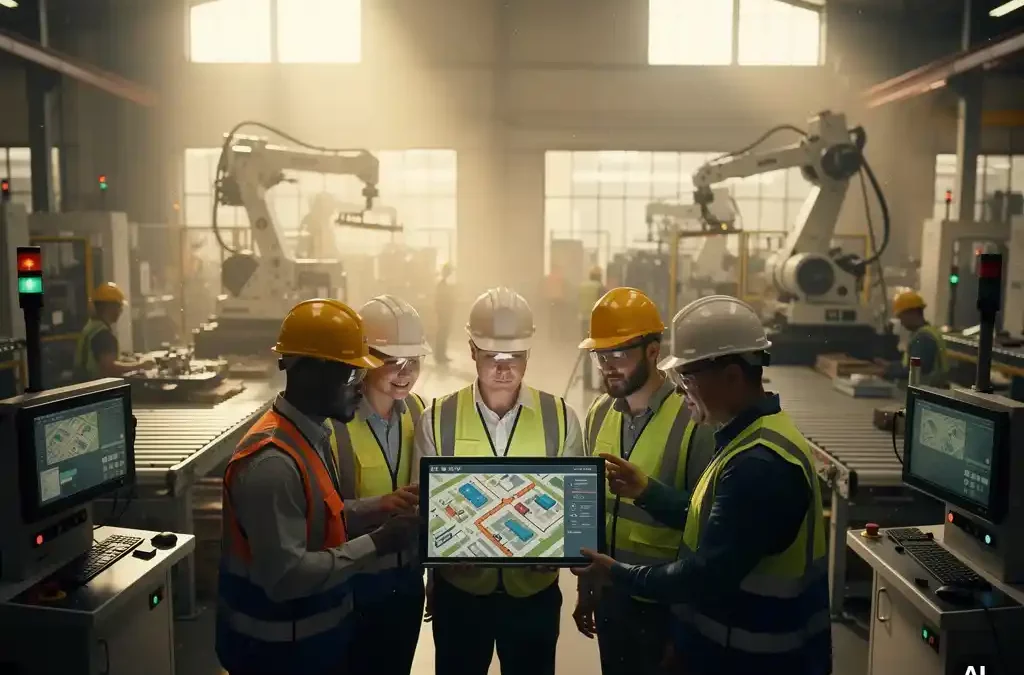
Scaling a shopfloor rollout across multiple sites can be a daunting task for manufacturers. The key to success lies in adopting a strategic approach that minimizes disruption while maximizing efficiency. A digital shopfloor platform like Factorise can play a crucial role in this process. By leveraging its comprehensive suite of tools, manufacturers can streamline operations, enhance productivity, and ensure consistent quality across all locations. This article explores the essential steps and considerations for effectively scaling your manufacturing operations.
Understanding the challenges of multi-site rollouts
Rolling out a shopfloor solution across multiple sites presents unique challenges. Each site may have its own processes, equipment, and workforce dynamics, making a one-size-fits-all approach impractical. The primary challenge is achieving uniformity in operations without stifling the individual strengths of each location.
Furthermore, coordinating the deployment of new systems and ensuring that all staff are adequately trained can be complex. Resistance to change is a common hurdle, as employees may be reluctant to adopt new technologies. Overcoming these challenges requires careful planning and a phased approach to implementation.
Why a digital shopfloor is key to scaling
A digital shopfloor is instrumental in scaling manufacturing operations efficiently. By digitizing processes, manufacturers can gain real-time insights into production performance, identify bottlenecks, and make informed decisions. This visibility is crucial for maintaining consistency and quality across multiple sites.
Moreover, a digital platform facilitates communication and collaboration among teams, enabling them to share best practices and solve problems more effectively. Factorise, for example, offers modules like the Issue Optimiser, which helps in real-time issue resolution, ensuring that problems are addressed swiftly and do not impact overall productivity.
Steps to prepare for a successful rollout
Preparation is critical for a successful multi-site rollout. Start by conducting a thorough assessment of each site's current operations and identifying areas that would benefit most from digitization. Engage with site managers and operators to understand their specific needs and challenges.
Next, develop a phased implementation plan. Begin with a pilot program at one or two sites to test the system and gather feedback. This approach allows for adjustments before a full-scale rollout. Ensure that training programs are in place to help staff adapt to new technologies and processes.
How to maintain consistency across sites
Maintaining consistency across sites is vital for achieving operational excellence. Standardizing processes and workflows is the first step. Use digital tools to create uniform work instructions and quality checklists that can be easily accessed by operators at all locations.
Regular audits and performance reviews are also essential. Utilize dashboards and reports to monitor key performance indicators (KPIs) and ensure that all sites are meeting the desired standards. Factorise's cascading dashboards provide live OEE data, helping managers quickly identify and address any deviations from the norm.
Leveraging data for continuous improvement
Data is a powerful tool for driving continuous improvement. By collecting and analyzing data from all sites, manufacturers can identify trends, uncover inefficiencies, and implement targeted improvements. This data-driven approach enables proactive decision-making and fosters a culture of continuous improvement.
Factorise's platform supports this by offering comprehensive data analytics capabilities. Modules like Production Performance provide insights into value stream efficiency, helping teams to pinpoint areas for enhancement and track the impact of changes over time.
Common pitfalls and how to avoid them
One common pitfall in multi-site rollouts is underestimating the complexity of integration. Ensure that all systems are compatible and that data can flow seamlessly between them. Avoid the temptation to implement too many changes at once, as this can overwhelm staff and lead to resistance.
Another mistake is neglecting the human element. Engage with employees early in the process and provide ongoing support and training. Address their concerns and highlight the benefits of the new system to gain their buy-in and cooperation.
What to do after the rollout
Once the rollout is complete, it's important to focus on sustaining the momentum. Continue to monitor performance and gather feedback from all sites. Use this information to make iterative improvements and ensure that the system evolves to meet changing needs.
Factorise can assist in this ongoing journey by providing tools and support for continuous optimization. Our platform is designed to grow with your business, offering flexibility and scalability as your operations expand. **Explore how digital manufacturing can transform your operations**.
Ready to take the first step? We like to start with a fit-gap session: a day or two to understand where you are, which pain points are most urgent, and which modules deliver the fastest value. **Book your first fit-gap session**. No sales pitch. Just an honest conversation about what's realistic.
Frequently Asked Questions
How can I ensure a smooth transition to a digital shopfloor platform?
To ensure a smooth transition, start by engaging with all stakeholders early in the process. Provide comprehensive training and support to staff, and address any concerns they may have. Implement the platform in phases, beginning with a pilot program to gather feedback and make necessary adjustments.
What are the best practices for training staff on new digital tools?
Best practices include offering hands-on training sessions, creating easy-to-follow guides and tutorials, and providing ongoing support. Encourage a culture of continuous learning and make sure that staff understand the benefits of the new tools to increase buy-in.
How do I measure the success of a multi-site rollout?
Measure success by setting clear KPIs before the rollout and regularly reviewing them. Use dashboards to monitor real-time performance data, and conduct regular audits and feedback sessions to ensure all sites are meeting desired standards.
What should I do if I encounter resistance from employees during the rollout?
Address resistance by communicating the benefits of the new system clearly and involving employees in the process. Listen to their concerns, provide reassurance, and offer incentives for adoption. Highlight success stories and improvements resulting from the new system.
How can I leverage data analytics to improve manufacturing operations?
Utilize data analytics to identify trends and inefficiencies in your operations. Use this information to make informed decisions and implement targeted improvements. Regularly review data to track the impact of changes and continue to refine processes for better efficiency.
What steps should I take if a site is not meeting performance standards?
If a site is not meeting performance standards, conduct a thorough review to identify the root causes. Use data analytics to pinpoint specific issues and develop a targeted action plan. Provide additional training and support where necessary and monitor progress closely.
How can I maintain consistency in quality and operations across multiple sites?
Maintain consistency by standardizing processes and workflows. Use digital tools to create uniform work instructions and quality checklists accessible to all sites. Regularly review performance data and conduct audits to ensure adherence to standards.
Related Articles
- How do you choose between buying and building shopfloor software?
- How do you avoid shadow IT on the shop floor?
- What is an Andon system and how does it work?
- What is production cascade and how does it support daily management?
- How do you use an OEE calculator on the shop floor?
- What is lean daily management in manufacturing?
- What is the role of digital tools in reducing labour dependency in manufacturing?
- What is the first step to implementing a MES in a midmarket factory?
- Why do new operators make the same mistakes as their predecessors?
- What does version control in work instructions mean in practice?
- Why does the same machine keep breaking down?
- What is condition-based maintenance in manufacturing?
- What is the difference between real-time OEE and end-of-shift OEE?
- Why is 85% OEE considered world-class?
- Does the 85% OEE benchmark apply to every type of factory?