
“`html
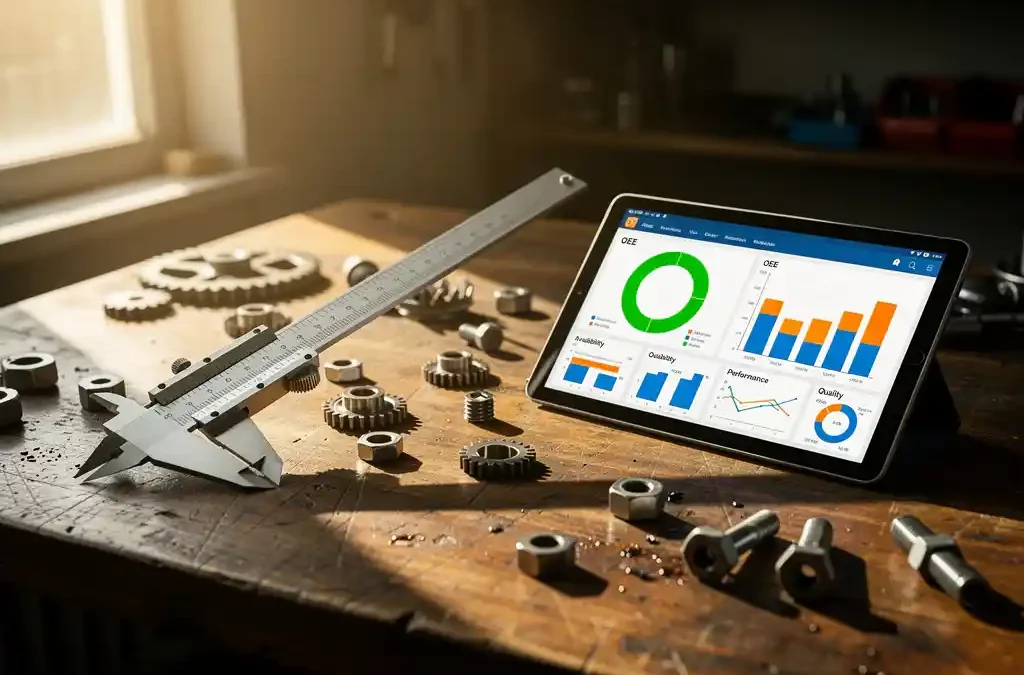
To start measuring OEE (Overall Equipment Effectiveness) if you’ve never done it before, begin by understanding its components: Availability, Performance, and Quality. Each of these factors is crucial in determining how effectively your manufacturing process is running. OEE is important because it provides a comprehensive view of your equipment’s productivity, helping you identify areas for improvement.
OEE is a key metric for manufacturers aiming to enhance efficiency and reduce waste. By measuring OEE, you can pinpoint inefficiencies and make data-driven decisions to optimize production. This article will guide you through calculating OEE, the tools you need, interpreting results, common challenges, and how OEE can improve your manufacturing process.
What is OEE and why is it important?
OEE, or Overall Equipment Effectiveness, is a standard for measuring manufacturing productivity. It combines Availability, Performance, and Quality to indicate how well a manufacturing operation is utilized. OEE is important because it identifies the percentage of manufacturing time that is truly productive, providing insights into potential improvements.
Availability measures the percentage of scheduled time that the equipment is available to operate. Performance assesses whether the equipment is running at its maximum speed. Quality evaluates the proportion of products that meet quality standards. Together, these metrics help manufacturers understand and improve their production efficiency.
How do you calculate OEE?
To calculate OEE, multiply the Availability, Performance, and Quality percentages. This formula provides a comprehensive view of equipment effectiveness. OEE = Availability x Performance x Quality. Each component measures a different aspect of productivity, giving a holistic view of manufacturing efficiency.
For example, if your Availability is 90%, Performance is 95%, and Quality is 98%, your OEE would be 83.79%. This means that 83.79% of the manufacturing time is productive. Calculating OEE helps identify areas where improvements can be made, such as reducing downtime or increasing production speed.
What tools do you need to start measuring OEE?
To start measuring OEE, you need tools that can track and analyze Availability, Performance, and Quality data. These tools often include real-time monitoring systems and software that integrate with existing manufacturing equipment to provide accurate data collection.
Many manufacturers use digital platforms that offer real-time OEE tracking and reporting. These platforms can connect to machines and gather data automatically, reducing manual entry errors. Additionally, tools that support mobile access and multilingual interfaces can enhance usability for operators on the shop floor.
How can you interpret OEE results?
Interpreting OEE results involves analyzing the individual components of Availability, Performance, and Quality to understand where losses occur. A low OEE score indicates inefficiencies in one or more of these areas, guiding where to focus improvement efforts.
For instance, if Availability is low, it may suggest frequent equipment downtime. Low Performance could indicate that machines are not operating at optimal speed. Poor Quality might reveal issues with product defects. Understanding these components helps prioritize corrective actions to enhance overall productivity.
What are common challenges when starting with OEE?
Common challenges when starting with OEE include data accuracy, integration with existing systems, and operator engagement. Ensuring accurate data collection can be difficult if relying on manual entries. Integrating OEE measurement tools with existing ERP or MES systems may also present technical challenges.
Additionally, gaining buy-in from operators is crucial, as systems designed without their input often fail. Implementing user-friendly, mobile-first interfaces and phased rollouts can help overcome these challenges, ensuring that OEE measurement becomes a valuable tool for continuous improvement.
How can OEE improve your manufacturing process?
OEE can significantly improve your manufacturing process by identifying inefficiencies and highlighting areas for improvement. By regularly measuring OEE, manufacturers can reduce downtime, increase production speed, and enhance product quality, leading to increased productivity and cost savings.
Manufacturers have reported typical results such as a 5-8 point improvement in OEE within 6-12 months of deploying real-time visibility tools. By addressing the root causes of inefficiencies, OEE helps streamline operations and supports a culture of continuous improvement. For more insights on digital manufacturing, visit the Factorise website.
Ready to take the first step? We like to start with a fit-gap session: a day or two to understand where you are, which pain points are most urgent, and which modules deliver the fastest value. Book your first fit-gap session. No sales pitch. Just an honest conversation about what’s realistic.
“`
Related Articles
- What is the cost of unplanned downtime in manufacturing?
- How do you prevent equipment breakdowns in manufacturing?
- What is preventive maintenance in manufacturing?
- What is reactive maintenance and why is it a problem?
- How to reduce downtime in manufacturing?
- What is ISO 22400 and what does it have to do with OEE?
- Why does inconsistent OEE measurement make improvement impossible?
- What is the difference between OEE and TEEP?
- Does the 85% OEE benchmark apply to every type of factory?
- How do you build a performance culture on the shopfloor?
- What is a good OEE score for a manufacturing plant?
- What is OEE in manufacturing?
- How do you solve recurring problems on the shopfloor?
- How is OEE calculated?
- How do you measure performance losses in OEE?