
“`html
Real-time OEE (Overall Equipment Effectiveness) provides immediate insights into the efficiency of manufacturing operations by measuring availability, performance, and quality as they occur. Unlike end-of-shift OEE, which is calculated after production ends, real-time OEE allows for proactive adjustments, helping manufacturers address issues as they arise and optimize production processes continuously.
What is real-time OEE and why is it important?
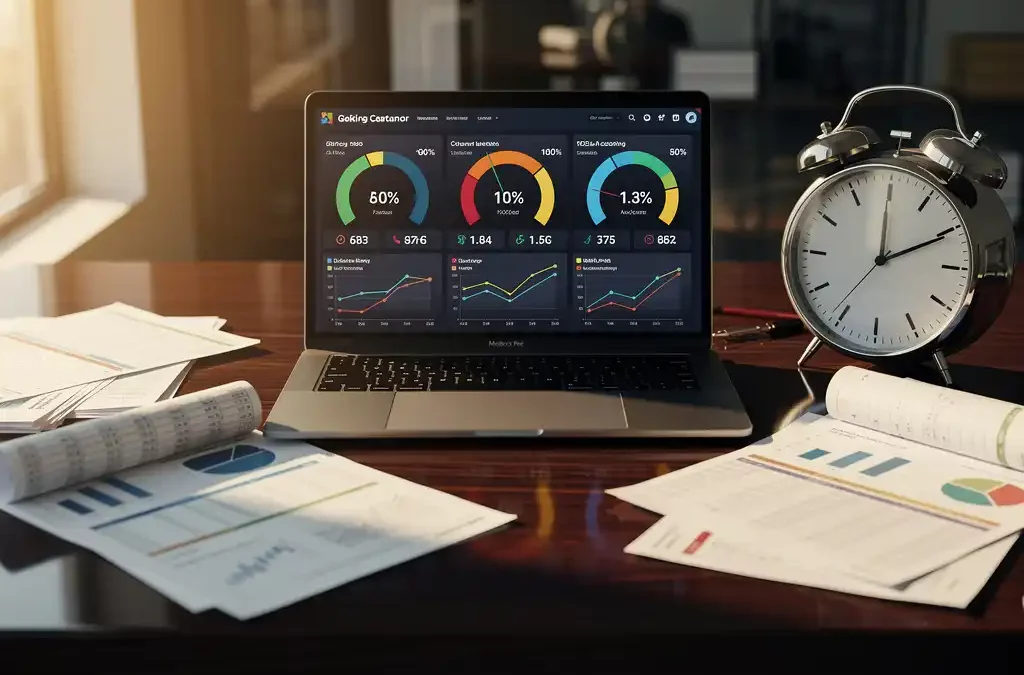
Real-time OEE is a dynamic measurement of manufacturing efficiency that captures data on availability, performance, and quality in real time. This immediacy helps manufacturers identify and address inefficiencies as they occur, rather than waiting until the end of a shift. By providing a live view of operations, real-time OEE supports quick decision-making and enhances the ability to maintain optimal production levels.
Real-time OEE is crucial because it enables manufacturers to react promptly to issues such as equipment failures or quality defects, minimizing downtime and waste. This approach contrasts with traditional methods that rely on post-shift analysis, which can delay corrective actions and result in lost production opportunities. Implementing real-time OEE can lead to significant improvements in productivity and cost savings.
How does end-of-shift OEE differ from real-time OEE?
End-of-shift OEE is calculated after a production shift has concluded, providing a retrospective view of equipment effectiveness. In contrast, real-time OEE offers ongoing insights during production, allowing for immediate adjustments. The key difference lies in the timing of data collection and the ability to act on insights in real time versus after the fact.
End-of-shift OEE often relies on manual data entry and retrospective analysis, which can lead to inaccuracies and missed opportunities for improvement. Real-time OEE, on the other hand, leverages automated data collection systems that continuously monitor production metrics. This real-time approach not only improves accuracy but also empowers operators and managers to make informed decisions that enhance operational efficiency.
What are the benefits of using real-time OEE?
Using real-time OEE offers several benefits, including enhanced decision-making, reduced downtime, and improved overall equipment effectiveness. By providing immediate insights, real-time OEE allows manufacturers to quickly identify and resolve issues, leading to more efficient operations and higher productivity.
Real-time OEE also facilitates continuous improvement by enabling teams to track performance metrics and implement changes on the fly. This proactive approach helps prevent small issues from escalating into major problems, reducing the likelihood of costly production halts. Additionally, real-time OEE supports better resource allocation and planning, as managers have access to up-to-date information about production capabilities and constraints.
Why might some manufacturers prefer end-of-shift OEE?
Some manufacturers might prefer end-of-shift OEE due to its simplicity and lower initial implementation costs. This method does not require the same level of technological investment as real-time systems, making it more accessible for smaller operations or those with limited budgets.
End-of-shift OEE can also be suitable for environments where production processes are stable and do not require frequent adjustments. In such cases, the insights gained from post-shift analysis may be sufficient for maintaining efficiency and addressing periodic issues. However, it is important to note that while end-of-shift OEE may be easier to implement initially, it may not provide the same level of operational agility and responsiveness as real-time OEE.
Which OEE method is better for your manufacturing process?
The choice between real-time OEE and end-of-shift OEE depends on the specific needs and capabilities of your manufacturing process. Real-time OEE is ideal for operations that require quick responses to dynamic production environments, while end-of-shift OEE may suffice for more stable processes with fewer disruptions.
Consider factors such as the complexity of your production lines, the frequency of equipment issues, and your organization’s capacity for technological investment. Manufacturers who prioritize agility and continuous improvement may find real-time OEE more beneficial, as it supports proactive management and rapid problem-solving. Conversely, those with simpler operations or budget constraints might opt for end-of-shift OEE as a starting point, potentially transitioning to real-time systems as their needs evolve.
Explore how Factorise can support your OEE improvement journey.
Ready to take the first step? We like to start with a fit-gap session: a day or two to understand where you are, which pain points are most urgent, and which modules deliver the fastest value. Book your first fit-gap session. No sales pitch. Just an honest conversation about what’s realistic.
“`
Related Articles
- What are the most common causes of machine downtime in a factory?
- What is reactive maintenance and why is it a problem?
- What is condition-based maintenance in manufacturing?
- What is MTBF and how do you calculate it?
- How to reduce downtime in manufacturing?
- Why do most factories measure OEE but few act on it?
- What is a loss Pareto in manufacturing?
- What is the difference between OEE and TEEP?
- Why is 85% OEE considered world-class?
- What is a good OEE score for a manufacturing plant?
- What is production efficiency in manufacturing?
- What is OEE in manufacturing?
- How is OEE calculated?
- How do you know if your factory is performing as well as it should be?
- What is quality in OEE?