
“`html
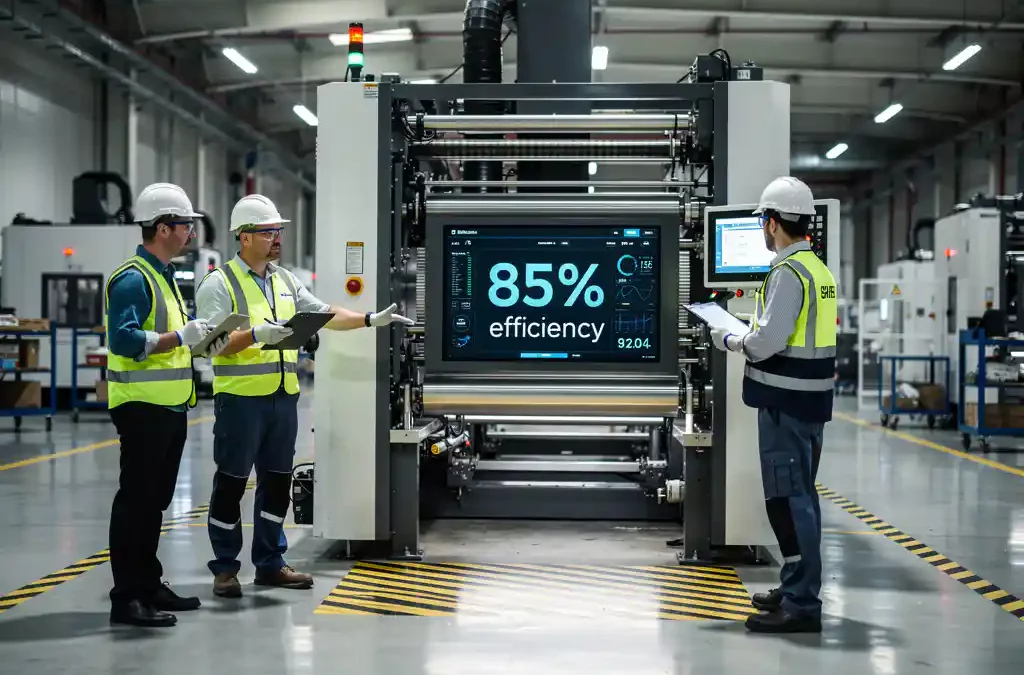
The 85% OEE benchmark is a widely accepted target for world-class manufacturing performance, but it doesn’t universally apply to every factory type. While it serves as a useful goal for many, industries with different operational complexities or production processes may require tailored benchmarks. Understanding specific factory needs and constraints is crucial for setting realistic OEE targets. This article explores how the 85% OEE benchmark applies across various industries and what factors influence OEE performance.
What is the 85% OEE benchmark and why is it important?
The 85% OEE benchmark is a standard measure of manufacturing efficiency, indicating that a factory is operating at 85% of its full potential. This benchmark is important because it helps manufacturers gauge their performance against industry standards and identify areas for improvement. Achieving this level of efficiency often signifies a well-optimized production process, minimizing downtime, defects, and speed losses.
OEE, or Overall Equipment Effectiveness, combines three key metrics: Availability, Performance, and Quality. Each component reflects different aspects of production efficiency, such as machine uptime, operational speed, and product quality. By targeting 85% OEE, manufacturers aim to improve these areas, leading to increased productivity and reduced operational costs.
Does the 85% OEE benchmark apply to every type of factory?
The 85% OEE benchmark does not apply universally to all factory types. While it is a useful target for many, each industry has unique characteristics that can influence the ideal OEE level. Factors such as production complexity, product variety, and operational scale can affect what is considered a realistic OEE target.
For instance, high-mix, low-volume manufacturers may find it challenging to reach 85% OEE due to frequent changeovers and diverse product requirements. Conversely, industries with stable, high-volume production lines might easily achieve or exceed this benchmark. Therefore, it’s essential for factories to evaluate their specific circumstances and set OEE goals that reflect their operational realities.
How can different industries achieve the 85% OEE benchmark?
Different industries can achieve the 85% OEE benchmark by tailoring their strategies to address specific operational challenges. Key approaches include implementing lean manufacturing principles, optimizing maintenance schedules, and investing in technology to enhance production visibility and control.
For example, industries with frequent changeovers can adopt SMED (Single-Minute Exchange of Die) techniques to minimize setup times. Meanwhile, sectors reliant on high-speed production might focus on reducing minor stoppages and speed losses. By aligning improvement efforts with industry-specific needs, manufacturers can make significant strides toward reaching the 85% OEE benchmark.
What factors influence OEE performance in factories?
Several factors influence OEE performance in factories, including machine reliability, process efficiency, and workforce effectiveness. Availability, Performance, and Quality are the three components of OEE, each affected by different operational aspects.
Machine reliability impacts Availability, as frequent breakdowns lead to unplanned downtime. Process efficiency affects Performance, with speed losses and minor stoppages reducing operational speed. Workforce effectiveness influences Quality, as skilled operators are crucial for maintaining high product standards. Addressing these factors holistically can lead to improved OEE performance.
How does technology impact OEE in modern factories?
Technology significantly impacts OEE in modern factories by enhancing data visibility, process automation, and predictive maintenance. Advanced manufacturing software provides real-time insights into production metrics, enabling quick identification and resolution of inefficiencies.
Automation technologies reduce manual intervention, minimizing human error and increasing process consistency. Predictive maintenance tools help prevent unexpected machine failures by analyzing equipment health data. Together, these technologies enable manufacturers to optimize OEE by improving Availability, Performance, and Quality.
Should factories aim for higher than 85% OEE?
Factories should consider aiming for higher than 85% OEE if their operational context supports it. While 85% is a strong benchmark, some industries with stable, high-volume production can push beyond it to achieve even greater efficiency and cost savings.
However, it’s important to balance ambition with practicality. Overemphasizing OEE improvement can lead to diminishing returns or neglect of other critical areas, such as innovation and employee well-being. Therefore, factories should evaluate their unique circumstances and set OEE targets that align with their broader business objectives.
At Factorise, we understand the complexities of achieving optimal OEE. Our composable digital shopfloor platform is designed to help manufacturers improve efficiency by addressing specific pain points with tailored solutions. Ready to take the first step? We like to start with a fit-gap session: a day or two to understand where you are, which pain points are most urgent, and which modules deliver the fastest value. Book your first fit-gap session. No sales pitch. Just an honest conversation about what’s realistic.
“`
Related Articles
- What are the most common causes of machine downtime in a factory?
- How do you track machine downtime in a factory?
- What is preventive maintenance in manufacturing?
- What is MTTR in manufacturing?
- How to reduce downtime in manufacturing?
- What is unplanned downtime in manufacturing?
- What is ISO 22400 and what does it have to do with OEE?
- What is a loss Pareto in manufacturing?
- What is the average OEE in manufacturing?
- How do you build a performance culture on the shopfloor?
- What is a good OEE score for a manufacturing plant?
- What is OEE in manufacturing?
- How do you solve recurring problems on the shopfloor?
- What is the difference between a reactive and a proactive manufacturing operation?
- Why is the OEE number in most factories inaccurate?