
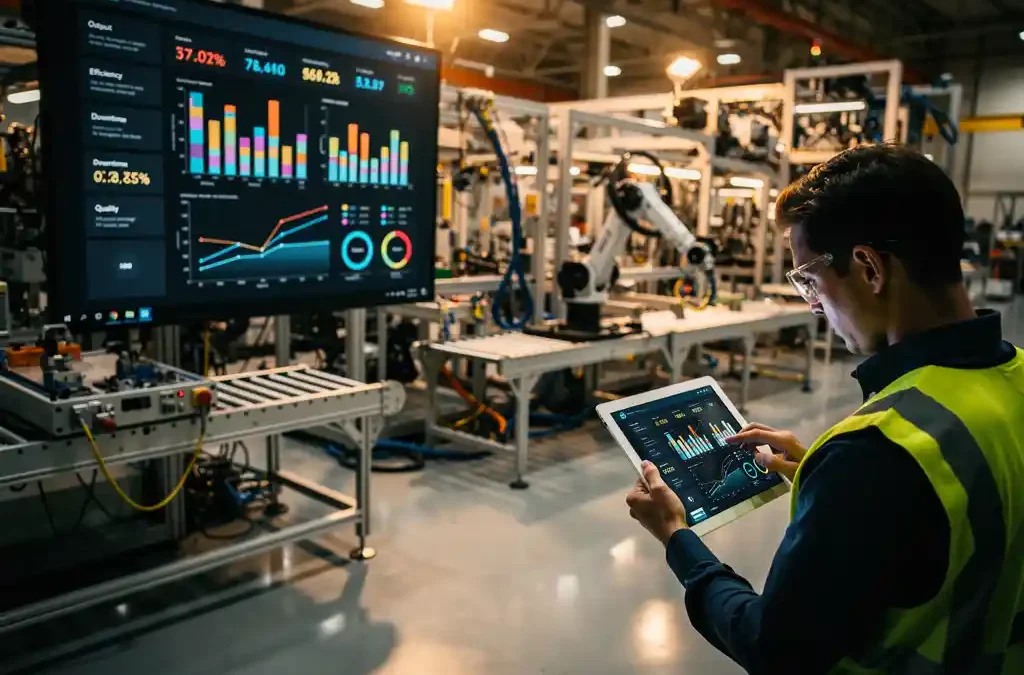
In manufacturing operations, the most critical metrics include Overall Equipment Effectiveness (OEE), production capacity utilization, and production loss analysis. These metrics help manufacturers assess efficiency, identify bottlenecks, and optimize performance. By focusing on these key areas, manufacturers can improve productivity and reduce costs, leading to better operational outcomes. This article explores these metrics and more, providing insights into measuring and improving manufacturing efficiency.
What are the key metrics in manufacturing operations?
The key metrics in manufacturing operations are OEE, production capacity utilization, and production loss analysis. OEE measures the effectiveness of equipment usage, while production capacity utilization assesses how well a factory uses its potential output. Production loss analysis identifies inefficiencies and areas for improvement. Together, these metrics provide a comprehensive view of manufacturing performance.
OEE is a crucial metric because it combines availability, performance, and quality into a single percentage, indicating how well a manufacturing process is running. Production capacity utilization shows the extent to which a factory’s output is being maximized, helping to identify underutilized resources. Production loss analysis focuses on pinpointing where and why losses occur, enabling targeted improvements.
How do you measure operational efficiency in manufacturing?
Operational efficiency in manufacturing is measured by evaluating OEE, analyzing production losses, and assessing capacity utilization. OEE provides a percentage that reflects equipment performance, while production loss analysis identifies inefficiencies. Capacity utilization measures how much of the available production capacity is being used effectively.
To measure OEE, manufacturers calculate the product of availability, performance, and quality rates. Production loss analysis involves identifying and quantifying factors like changeover times, machine downtime, and defective products. Capacity utilization is calculated by dividing actual output by potential output, providing insights into resource use efficiency.
Why is OEE important for manufacturers?
OEE is important for manufacturers because it provides a comprehensive measure of equipment efficiency, helping to identify areas for improvement. By tracking availability, performance, and quality, OEE highlights inefficiencies and guides operational enhancements. This metric is essential for optimizing production processes and increasing profitability.
Manufacturers benefit from OEE by gaining insights into equipment performance, enabling them to reduce downtime, improve speed, and enhance product quality. It serves as a benchmark for comparing performance across different machines and production lines, facilitating continuous improvement and strategic decision-making.
How can data analytics improve manufacturing performance?
Data analytics improves manufacturing performance by providing insights into production processes, identifying inefficiencies, and enabling data-driven decisions. By analyzing data from various sources, manufacturers can optimize operations, reduce waste, and enhance productivity. This leads to improved efficiency and cost savings.
Through data analytics, manufacturers can monitor real-time performance metrics, predict maintenance needs, and streamline supply chain operations. This proactive approach minimizes downtime, enhances resource allocation, and improves overall production efficiency. Data analytics also supports quality control by identifying patterns and trends that affect product quality.
What role does quality control play in manufacturing metrics?
Quality control plays a vital role in manufacturing metrics by ensuring products meet specifications and reducing defects. It impacts metrics like OEE and production loss analysis by improving product quality and minimizing rework. Effective quality control enhances customer satisfaction and operational efficiency.
Incorporating quality control into manufacturing processes helps detect and correct defects early, reducing waste and improving yield. It also supports compliance with industry standards and regulations, maintaining product integrity and brand reputation. By integrating quality control with other manufacturing metrics, manufacturers can achieve a balanced approach to optimizing production performance.
At Factorise, we understand the importance of these metrics in driving manufacturing success. Our digital manufacturing platform helps you track and improve these key metrics effectively. Ready to take the first step? We like to start with a fit-gap session: a day or two to understand where you are, which pain points are most urgent, and which modules deliver the fastest value. Book your first fit-gap session. No sales pitch. Just an honest conversation about what’s realistic.
Related Articles
- How do you get operator buy-in for new shopfloor software?
- How do you support multiple languages on the shop floor?
- What is a composable MES and why does it matter?
- What is Industry 4.0 and what does it mean in practice?
- What is an Andon system and how does it work?
- What is production cascade and how does it support daily management?
- Why do MES implementations take longer than expected?
- What is OPC UA and how does it connect machines to a MES?
- How do manufacturers benchmark their own performance?
- What is the six big losses model in manufacturing?
- How do you connect maintenance and production teams to reduce downtime?
- How do you improve OEE in manufacturing?
- What causes low OEE in a factory?
- What is production efficiency in manufacturing?
- What is performance in OEE?