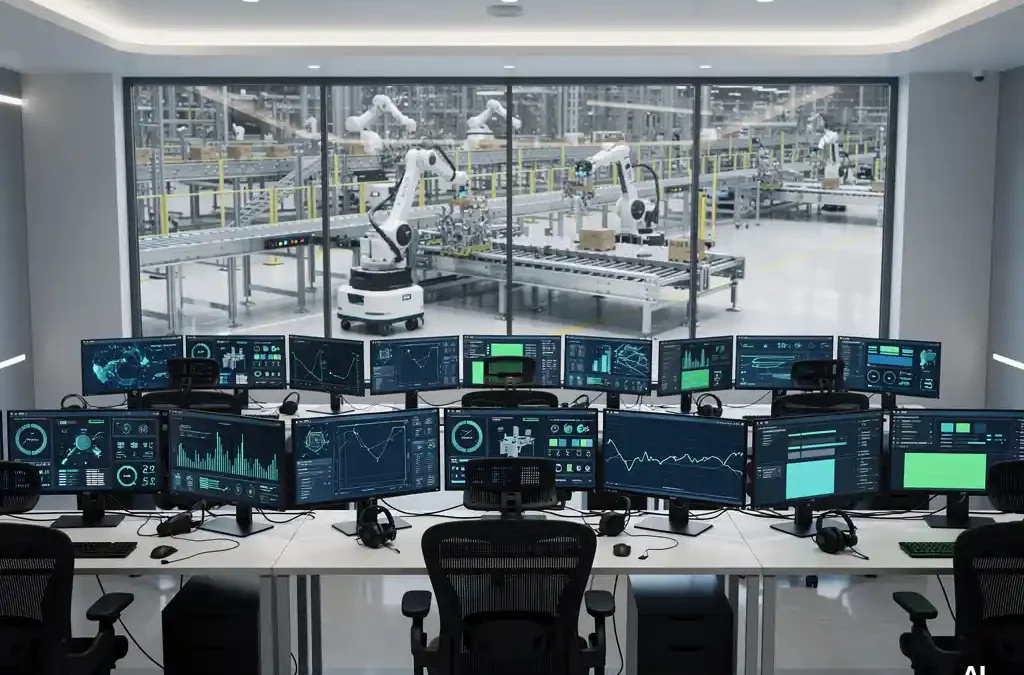
In the realm of manufacturing operations, a control tower acts as the central hub for monitoring and managing production processes. It provides real-time visibility and coordination across the shopfloor, ensuring that operations run smoothly and efficiently. By integrating data from various sources, a control tower helps manufacturers optimize production, reduce downtime, and improve overall efficiency. This article explores the essential components and benefits of a manufacturing control tower, as well as the challenges and future trends associated with its implementation.
Understanding the Role of a Control Tower
A control tower in manufacturing serves as a centralized platform that oversees the entire production process. It consolidates data from different systems, such as MES (Manufacturing Execution Systems) and ERP (Enterprise Resource Planning), to provide a comprehensive view of operations. This integration allows for better decision-making and enhances the ability to respond quickly to issues on the shopfloor.
The primary function of a control tower is to facilitate real-time monitoring and management. By providing a unified view of production activities, it enables operators and supervisors to identify bottlenecks, track performance, and ensure that production goals are met. This centralized approach reduces the complexity of managing multiple systems and streamlines communication across departments.
Key Components of a Manufacturing Control Tower
Several key components make up an effective manufacturing control tower. Firstly, data integration is crucial. A control tower must be able to aggregate data from various sources, including sensors, machines, and software systems. This data is then processed and analyzed to provide actionable insights.
Another essential component is real-time analytics. By leveraging advanced analytics tools, a control tower can identify trends, predict potential issues, and recommend corrective actions. This proactive approach helps in minimizing downtime and enhancing productivity. Additionally, a user-friendly interface is vital for operators and managers to interact with the control tower effectively, ensuring that information is accessible and actionable.
How Control Towers Improve Shopfloor Efficiency
Control towers significantly enhance shopfloor efficiency by providing real-time visibility into production processes. This visibility allows for proactive management, where supervisors can address issues before they escalate into major problems. For example, if a machine is running below optimal speed, the control tower can alert operators to investigate and resolve the issue promptly.
Moreover, control towers facilitate better resource allocation. By analyzing production data, they can help managers allocate resources more effectively, ensuring that the right people and materials are in the right place at the right time. This optimization leads to reduced waste, lower costs, and improved overall efficiency on the shopfloor.
The Impact of Digital Transformation on Control Towers
Digital transformation has revolutionized the functionality of control towers. With advancements in IoT (Internet of Things) and AI (Artificial Intelligence), control towers can now process vast amounts of data in real time, providing deeper insights and predictive capabilities. This transformation enables manufacturers to move from reactive to predictive maintenance, reducing downtime and extending equipment life.
Furthermore, digital transformation facilitates seamless integration with other systems, such as supply chain and logistics, enhancing the overall operational efficiency. By leveraging cloud-based solutions, control towers can offer scalability and flexibility, allowing manufacturers to adapt to changing demands and market conditions.
Choosing the Right Control Tower Solution for Your Operations
Selecting the appropriate control tower solution requires careful consideration of several factors. Firstly, it's essential to assess the specific needs and challenges of your operations. A one-size-fits-all approach rarely works, so it's crucial to choose a solution that aligns with your production goals and integrates seamlessly with existing systems.
Additionally, consider the scalability and flexibility of the solution. As your operations grow, the control tower should be able to accommodate increased data volumes and support new functionalities. It's also important to evaluate the vendor's expertise and support services to ensure a smooth implementation and ongoing maintenance.
Common Challenges in Implementing Control Towers
Implementing a control tower can present several challenges. One of the primary obstacles is data integration. Many manufacturers operate with legacy systems that may not easily connect with modern control tower solutions. Overcoming this challenge requires a robust integration strategy and possibly upgrading existing infrastructure.
Another challenge is change management. Adopting a control tower involves significant changes in workflows and processes. It's essential to engage all stakeholders, provide adequate training, and address any resistance to change to ensure a successful implementation. Additionally, maintaining data accuracy and security is crucial to prevent disruptions and ensure reliable decision-making.
Future Trends in Control Tower Technology
The future of control tower technology is promising, with several trends shaping its evolution. One such trend is the increasing use of AI and machine learning to enhance predictive capabilities. These technologies enable control towers to anticipate issues before they occur, further reducing downtime and improving efficiency.
Another trend is the integration of augmented reality (AR) and virtual reality (VR) for enhanced visualization and training. These technologies can provide operators with immersive experiences, improving their understanding of complex processes and facilitating better decision-making. As technology continues to advance, control towers will become even more integral to optimizing manufacturing operations.
Ready to take the first step? We like to start with a fit-gap session: a day or two to understand where you are, which pain points are most urgent, and which modules deliver the fastest value. Book your first fit-gap session. No sales pitch. Just an honest conversation about what's realistic.
Frequently Asked Questions
What are the main benefits of implementing a manufacturing control tower?
A manufacturing control tower offers real-time visibility into production processes, enhances decision-making, reduces downtime, and improves overall efficiency by integrating data from various sources.
How does a control tower integrate with existing manufacturing systems?
Control towers integrate with existing systems like MES and ERP by consolidating data from different sources, providing a unified view of operations, and facilitating seamless communication across departments.
What challenges might a company face when implementing a control tower?
Common challenges include data integration with legacy systems, change management, and ensuring data accuracy and security. Overcoming these requires a robust integration strategy and stakeholder engagement.
How can digital transformation enhance the functionality of a control tower?
Digital transformation, through IoT and AI, enables control towers to process large data volumes in real time, offering predictive capabilities and seamless integration with other systems like supply chain and logistics.
What future trends are expected in control tower technology?
Future trends include the use of AI and machine learning for predictive maintenance, and the integration of AR and VR for enhanced visualization and training, making control towers more integral to manufacturing operations.
How should a company choose the right control tower solution?
Companies should assess their specific needs, ensure the solution aligns with production goals, check for scalability and flexibility, and evaluate the vendor's expertise and support services for a smooth implementation.
What role does real-time analytics play in a control tower?
Real-time analytics in a control tower helps identify trends, predict potential issues, and recommend corrective actions, thereby minimizing downtime and enhancing productivity.
Related Articles
- How do you avoid shadow IT on the shop floor?
- How do you build a business case for shopfloor digitalisation?
- What is downtime tracking and why does it matter?
- How do you track production performance across multiple shifts?
- How do you improve shift handover in a factory?
- What is lean daily management in manufacturing?
- What happens when an experienced operator leaves and takes their knowledge with them?
- How do you document manufacturing knowledge before it is lost?
- What does an audit finding related to work instructions look like?
- How do you connect maintenance and production teams to reduce downtime?
- What is preventive maintenance in manufacturing?
- How do you improve production efficiency in a factory?
- What causes low OEE in a factory?
- What is the difference between OEE and TEEP?
- Does the 85% OEE benchmark apply to every type of factory?