
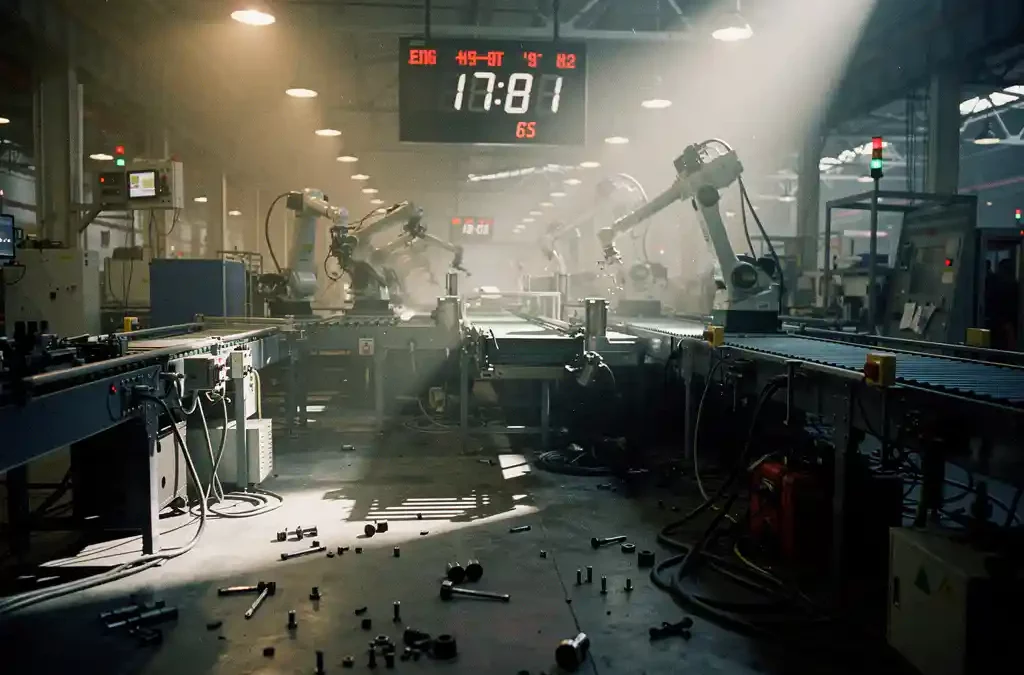
Unplanned downtime in manufacturing refers to unexpected stops in production due to equipment failures, process issues, or human errors. These interruptions can lead to significant financial losses, reduced productivity, and missed deadlines. Addressing unplanned downtime is crucial for maintaining efficiency and competitiveness in the manufacturing sector. In this article, we’ll explore the causes, impacts, and solutions for unplanned downtime, providing valuable insights for manufacturers seeking to optimize their operations.
What is unplanned downtime in manufacturing?
Unplanned downtime in manufacturing is the unexpected cessation of production activities due to unforeseen issues such as equipment breakdowns, process failures, or human errors. Unlike planned downtime, which is scheduled for maintenance or upgrades, unplanned downtime can disrupt operations and result in lost productivity and increased costs.
Manufacturers often face challenges in predicting and preventing unplanned downtime, which can stem from various sources. These include mechanical failures, software glitches, or even supply chain disruptions. The impact of unplanned downtime can be severe, affecting not just immediate production but also long-term operational efficiency.
How does unplanned downtime affect manufacturing costs?
Unplanned downtime significantly increases manufacturing costs by halting production, leading to lost revenue, higher labor costs, and potential penalties for delayed deliveries. It also incurs costs related to emergency repairs and overtime work to meet production schedules.
When production stops unexpectedly, manufacturers must still pay workers, often at overtime rates, to address the issues and resume operations. Additionally, the cost of repairs and replacement parts can add up quickly. Over time, frequent unplanned downtime can erode profit margins and damage customer relationships due to delayed orders.
What are the main causes of unplanned downtime?
The main causes of unplanned downtime in manufacturing include equipment failures, human errors, and process inefficiencies. Equipment failures can arise from inadequate maintenance or aging machinery, while human errors often result from insufficient training or oversight.
Process inefficiencies, such as bottlenecks or misaligned workflows, can also lead to unexpected stoppages. Additionally, external factors like supply chain disruptions or power outages can contribute to unplanned downtime. Identifying and addressing these root causes is essential for minimizing disruptions and maintaining smooth operations.
How can manufacturers reduce unplanned downtime?
Manufacturers can reduce unplanned downtime by implementing predictive maintenance, enhancing operator training, and optimizing processes. Predictive maintenance uses data analytics to anticipate equipment failures before they occur, allowing for timely interventions.
Training operators to handle machinery effectively and recognize early signs of potential issues can prevent human errors. Streamlining processes and eliminating inefficiencies can also reduce the likelihood of unexpected stoppages. By adopting these strategies, manufacturers can enhance reliability and minimize disruptions.
What tools help in monitoring and reducing downtime?
Tools that help monitor and reduce downtime include real-time monitoring systems, predictive maintenance software, and integrated production management platforms. These tools provide visibility into equipment performance and process efficiency, enabling proactive management of potential issues.
Real-time monitoring systems track machine data to detect anomalies, while predictive maintenance software analyzes trends to predict failures. Integrated platforms, like Factorise’s digital shopfloor solutions, connect systems and streamline operations, reducing the risk of unplanned downtime. By leveraging these technologies, manufacturers can improve uptime and operational efficiency.
Why is it important to address unplanned downtime promptly?
Addressing unplanned downtime promptly is important to minimize financial losses, maintain production schedules, and preserve customer trust. Quick resolution of downtime incidents prevents extended disruptions and reduces the impact on overall productivity.
Prompt action also helps prevent minor issues from escalating into major problems that require costly repairs or replacements. By prioritizing the rapid resolution of unplanned downtime, manufacturers can safeguard their operations and maintain a competitive edge in the market.
Addressing unplanned downtime is a critical aspect of maintaining efficiency in manufacturing. By understanding the causes and implementing effective strategies, manufacturers can minimize disruptions and improve their bottom line. Learn more about how Factorise can help reduce downtime with our comprehensive digital manufacturing solutions. Ready to take the first step? We like to start with a fit-gap session: a day or two to understand where you are, which pain points are most urgent, and which modules deliver the fastest value. Book your first fit-gap session. No sales pitch. Just an honest conversation about what’s realistic.
Related Articles
- What are the most common causes of machine downtime in a factory?
- How do you track machine downtime in a factory?
- What is MTBF and how do you calculate it?
- What is unplanned downtime in manufacturing?
- How do you start measuring OEE if you have never done it before?
- Why do most factories measure OEE but few act on it?
- How do you use OEE data to prioritise improvement?
- What is a good OEE score for a manufacturing plant?
- How do you solve recurring problems on the shopfloor?
- How is OEE calculated?
- What is performance in OEE?
- How do you know if your factory is performing as well as it should be?
- What is quality in OEE?
- How do you measure performance losses in OEE?
- How do you calculate availability in OEE?