
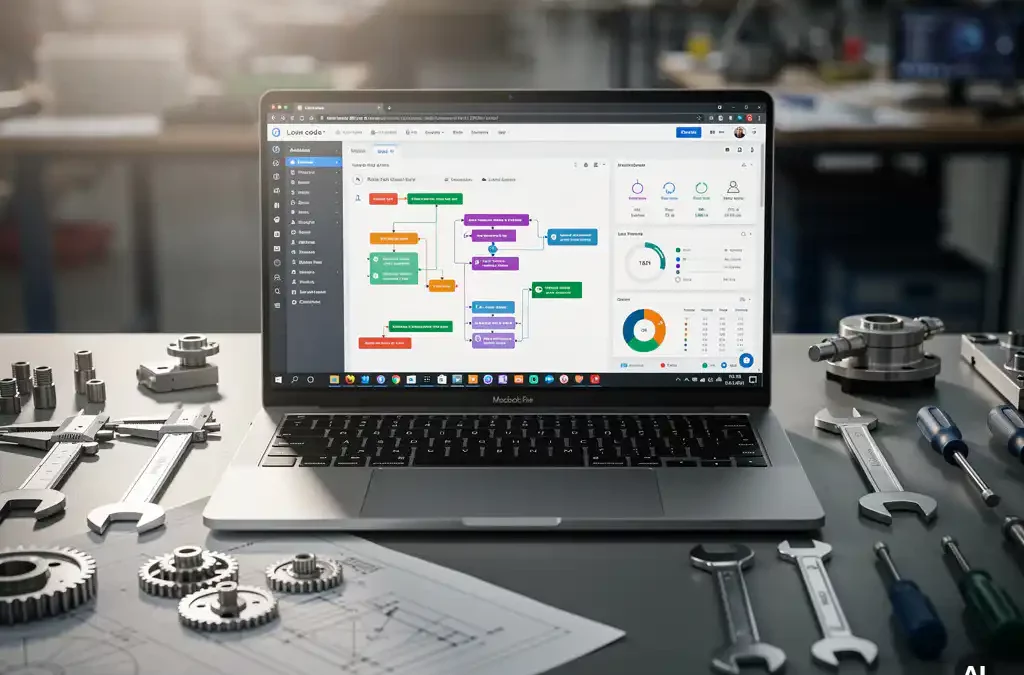
Low-code development is transforming the way manufacturing software is built and deployed. By simplifying the coding process, low-code platforms enable manufacturers to create custom applications faster and with fewer resources. This approach is particularly beneficial in the manufacturing sector, where agility and adaptability are crucial. In this article, we explore what low-code development is and why it matters for manufacturing software, providing insights into its role in digital transformation and its future trends.
Understanding Low-Code Development
Low-code development refers to a software development approach that requires minimal hand-coding. It uses visual interfaces with simple logic and drag-and-drop features, allowing users to create applications quickly and efficiently. This method is designed to make app development accessible to a broader range of people, not just those with extensive coding experience.
In the context of manufacturing, low-code platforms can help bridge the gap between IT and operational technology (OT). By enabling non-developers to contribute to software development, manufacturers can address specific operational needs more effectively. This democratization of app development is crucial in an industry where bespoke solutions are often needed to optimize processes and improve productivity.
The Role of Low-Code in Manufacturing Software
Low-code platforms play a significant role in the evolution of manufacturing software. They allow manufacturers to rapidly develop and deploy applications that can streamline operations, enhance productivity, and reduce costs. By using low-code, manufacturers can quickly adapt to changes in the market or production requirements without the lengthy development cycles associated with traditional coding methods.
Moreover, low-code platforms support the integration of various systems within a manufacturing environment. This integration is vital for creating a connected ecosystem where data flows seamlessly between different applications and devices. Such connectivity is essential for real-time decision-making and operational efficiency.
Why Low-Code Matters for Digital Transformation
Low-code is a critical enabler of digital transformation in manufacturing. It accelerates the development of digital solutions, allowing manufacturers to innovate and adapt to new challenges swiftly. By reducing the complexity of software development, low-code platforms empower manufacturers to focus on strategic initiatives rather than technical hurdles.
Digital transformation in manufacturing involves adopting new technologies to improve processes and outcomes. Low-code platforms facilitate this transformation by providing the tools needed to develop and implement these technologies efficiently. As a result, manufacturers can achieve greater agility, responsiveness, and competitiveness in the market.
How Mendix Powers Low-Code Solutions
Mendix, a leading low-code platform, is at the forefront of empowering manufacturers with its robust capabilities. Built on a foundation of simplicity and flexibility, Mendix allows manufacturers to create custom applications tailored to their specific needs. Its integration capabilities ensure that applications can seamlessly connect with existing systems, enhancing overall operational efficiency.
Factorise, built on Mendix, exemplifies how low-code can transform manufacturing operations. By leveraging Mendix's capabilities, Factorise enables manufacturers to digitalize their shopfloor operations without disrupting production. This approach not only saves time but also ensures that manufacturers can maintain their competitive edge.
Real-World Applications of Low-Code in Manufacturing
Manufacturers across various industries are already reaping the benefits of low-code platforms. For instance, some companies have used low-code to develop applications that monitor production lines in real time, providing insights that lead to improved efficiency and reduced downtime. Others have created custom dashboards that consolidate data from multiple sources, enabling better decision-making.
These real-world applications demonstrate the versatility and effectiveness of low-code solutions in addressing common manufacturing challenges. By allowing manufacturers to tailor applications to their unique needs, low-code platforms facilitate continuous improvement and innovation.
Addressing Common Misconceptions About Low-Code
Despite its growing popularity, low-code development is sometimes misunderstood. One common misconception is that low-code platforms can only create simple applications. In reality, modern low-code platforms like Mendix are capable of developing complex, enterprise-grade applications that meet rigorous industry standards.
Another misconception is that low-code solutions are not secure. However, reputable low-code platforms incorporate robust security measures to protect data and ensure compliance with industry regulations. As manufacturers increasingly adopt low-code, understanding these capabilities is crucial for making informed decisions.
Future Trends in Low-Code for Manufacturing
The future of low-code in manufacturing looks promising, with several trends set to shape its evolution. One such trend is the increasing use of artificial intelligence (AI) and machine learning (ML) within low-code platforms. These technologies can enhance the capabilities of low-code applications, enabling manufacturers to automate processes and gain deeper insights from their data.
Another trend is the growing importance of composability in manufacturing operations. As manufacturers seek to replace legacy systems with more flexible solutions, low-code platforms will play a key role in enabling this transition. By supporting modular and scalable applications, low-code platforms will continue to drive innovation in the manufacturing sector.
Ready to take the first step? We like to start with a fit-gap session: a day or two to understand where you are, which pain points are most urgent, and which modules deliver the fastest value. Book your first fit-gap session. No sales pitch. Just an honest conversation about what's realistic.
Frequently Asked Questions
How does low-code development differ from traditional coding methods?
Low-code development uses visual interfaces and drag-and-drop features, reducing the need for extensive hand-coding. This approach allows faster application development and is accessible to those without deep coding expertise, unlike traditional coding, which requires detailed programming knowledge.
Can low-code platforms handle complex manufacturing applications?
Yes, modern low-code platforms like Mendix are capable of developing complex, enterprise-grade applications. They are designed to meet rigorous industry standards and can handle intricate manufacturing processes and integrations.
What are the security measures in place for low-code platforms?
Reputable low-code platforms incorporate robust security measures, including data encryption, user authentication, and compliance with industry regulations, to protect sensitive information and ensure secure application deployment.
How do low-code platforms support digital transformation in manufacturing?
Low-code platforms accelerate digital transformation by simplifying the development of digital solutions. They allow manufacturers to innovate quickly and adapt to new challenges, focusing on strategic goals rather than technical complexities.
What role does AI and machine learning play in low-code development?
AI and machine learning are increasingly integrated into low-code platforms, enhancing their capabilities. These technologies enable automation of processes and provide deeper insights from data, driving innovation in manufacturing applications.
How can manufacturers start implementing low-code solutions?
Manufacturers can begin by identifying specific operational needs and exploring low-code platforms that offer the necessary tools and integrations. Engaging in a fit-gap session can help determine the best approach and modules for their unique requirements.
What is the significance of composability in low-code platforms for manufacturing?
Composability allows manufacturers to create modular and scalable applications, facilitating the transition from legacy systems to more flexible solutions. This capability is crucial for ongoing innovation and adaptability in manufacturing operations.
Related Articles
- What is Industry 4.0 and what does it mean in practice?
- How do you track production performance across multiple shifts?
- How do you identify production bottlenecks in a factory?
- What is continuous improvement in manufacturing?
- How do you get more output from the same number of machines?
- How do you standardise processes across shifts in a factory?
- How do you make sure the right operator is doing the right task?
- How do you make factory documentation accessible to operators on the production line?
- How do small and midsize manufacturers benefit from a MES?
- What is the cost of unplanned downtime in manufacturing?
- What is preventive maintenance in manufacturing?
- What is reactive maintenance and why is it a problem?
- Why does inconsistent OEE measurement make improvement impossible?
- How do you use OEE data to prioritise improvement?
- What is the difference between OEE and TEEP?