
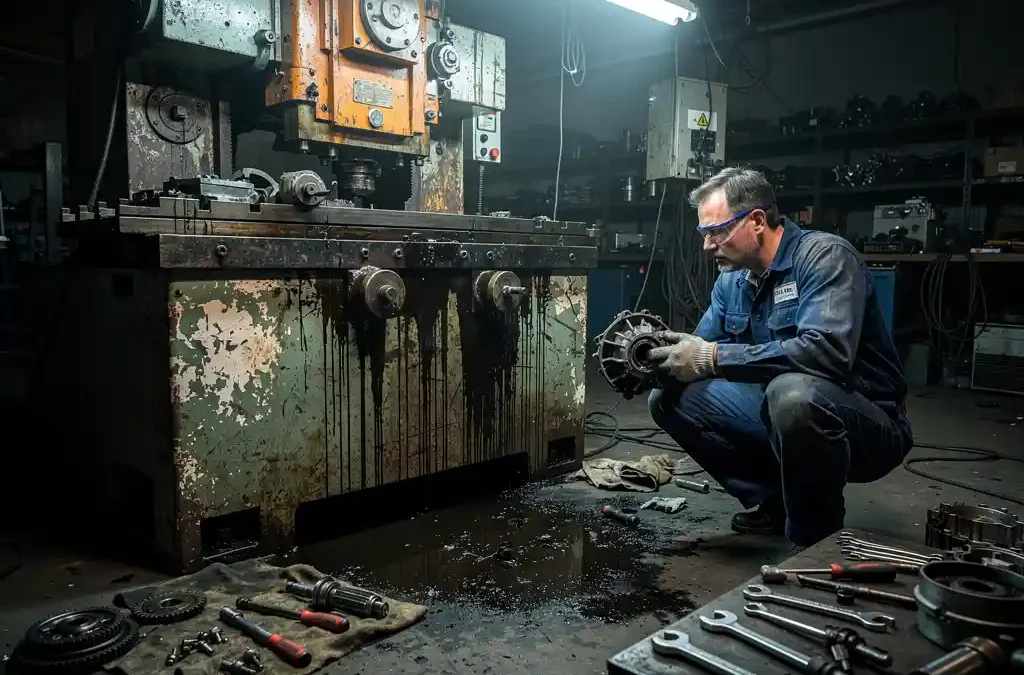
Reactive maintenance is a strategy where repairs are performed only after equipment has failed. This approach can lead to increased unplanned downtime, as issues are addressed only when they become critical. While it may seem cost-effective initially, relying solely on reactive maintenance often results in higher long-term costs and decreased equipment reliability. In this article, we’ll explore why reactive maintenance is problematic, its impact on equipment lifespan, hidden costs, and how transitioning to proactive maintenance can offer significant benefits.
What is reactive maintenance?
Reactive maintenance is the practice of repairing equipment only after a failure has occurred. This approach is often referred to as “run-to-failure” because it involves waiting until a machine or component breaks down before taking action. While it can be suitable for non-critical equipment, relying on reactive maintenance for essential machinery can lead to significant production disruptions.
In manufacturing, reactive maintenance is commonly seen as a short-term fix. It may initially save costs by avoiding unnecessary maintenance work, but it often results in higher expenses due to emergency repairs, overtime labor, and lost production time. This strategy can also strain resources, as maintenance teams must respond to unexpected breakdowns rather than focusing on planned activities.
Why is reactive maintenance considered problematic?
Reactive maintenance is problematic because it leads to increased unplanned downtime and higher repair costs. By waiting until equipment fails, manufacturers face unexpected production halts, which can disrupt schedules and affect delivery commitments. This unpredictability makes it difficult to manage resources effectively.
Additionally, reactive maintenance can result in safety hazards. When equipment fails unexpectedly, it can pose risks to operators and other machinery. This approach also lacks the foresight needed to prevent failures, meaning that issues are often addressed only after they have escalated, resulting in more extensive damage and costly repairs.
How does reactive maintenance impact equipment lifespan?
Reactive maintenance negatively impacts equipment lifespan by allowing small issues to escalate into major failures. When equipment is not regularly inspected and maintained, minor wear and tear can lead to significant damage over time. This neglect accelerates the deterioration of machinery, reducing its overall operational life.
Moreover, frequent breakdowns caused by reactive maintenance can lead to more severe stress on equipment components. This stress can cause parts to wear out faster, necessitating more frequent replacements and increasing the total cost of ownership. By not addressing issues proactively, manufacturers risk shortening the lifespan of their critical assets.
What are the hidden costs of reactive maintenance?
The hidden costs of reactive maintenance include increased labor expenses, higher parts costs, and lost production time. Emergency repairs often require overtime pay for maintenance staff and expedited shipping for replacement parts, both of which can significantly inflate costs. Additionally, unplanned downtime can result in lost revenue due to halted production.
Another hidden cost is the potential for decreased product quality. When equipment fails, it can lead to defects in the products being manufactured, resulting in waste and rework. This not only impacts the bottom line but can also harm a company’s reputation if defective products reach customers.
How can you transition from reactive to proactive maintenance?
Transitioning from reactive to proactive maintenance involves implementing a planned maintenance strategy that includes regular inspections and preventive measures. Start by conducting a thorough assessment of your current maintenance practices to identify areas for improvement. Develop a maintenance schedule that includes routine checks and servicing of critical equipment.
Invest in technology that supports predictive maintenance, such as sensors and monitoring systems that provide real-time data on equipment performance. This data can help identify potential issues before they lead to failures, allowing for timely interventions. Training staff on these new processes and technologies is also crucial to ensure successful implementation.
What are the benefits of proactive maintenance over reactive maintenance?
Proactive maintenance offers numerous benefits over reactive maintenance, including reduced unplanned downtime, lower repair costs, and extended equipment lifespan. By addressing issues before they escalate, manufacturers can maintain consistent production schedules and improve overall efficiency.
Additionally, proactive maintenance enhances safety by preventing unexpected equipment failures that could pose risks to operators. It also supports better resource management, as maintenance activities can be planned and scheduled in advance, reducing the need for emergency interventions. Manufacturers have reported typical results such as a 28% productivity boost and 20% cost savings when shifting to proactive maintenance strategies.
Explore how Factorise can help reduce factory downtime with proactive maintenance solutions.
Ready to take the first step? We like to start with a fit-gap session: a day or two to understand where you are, which pain points are most urgent, and which modules deliver the fastest value. Book your first fit-gap session. No sales pitch. Just an honest conversation about what’s realistic.
Related Articles
- What is the cost of unplanned downtime in manufacturing?
- What is the difference between planned and unplanned downtime?
- How do you prevent equipment breakdowns in manufacturing?
- How do you improve production efficiency in a factory?
- How to reduce downtime in manufacturing?
- What is the difference between real-time OEE and end-of-shift OEE?
- Why does inconsistent OEE measurement make improvement impossible?
- How do you use OEE data to prioritise improvement?
- What is the average OEE in manufacturing?
- How do you improve OEE in manufacturing?
- What is the difference between OEE and TEEP?
- Why is 85% OEE considered world-class?
- How do you build a performance culture on the shopfloor?
- What is quality in OEE?
- Why is the OEE number in most factories inaccurate?