
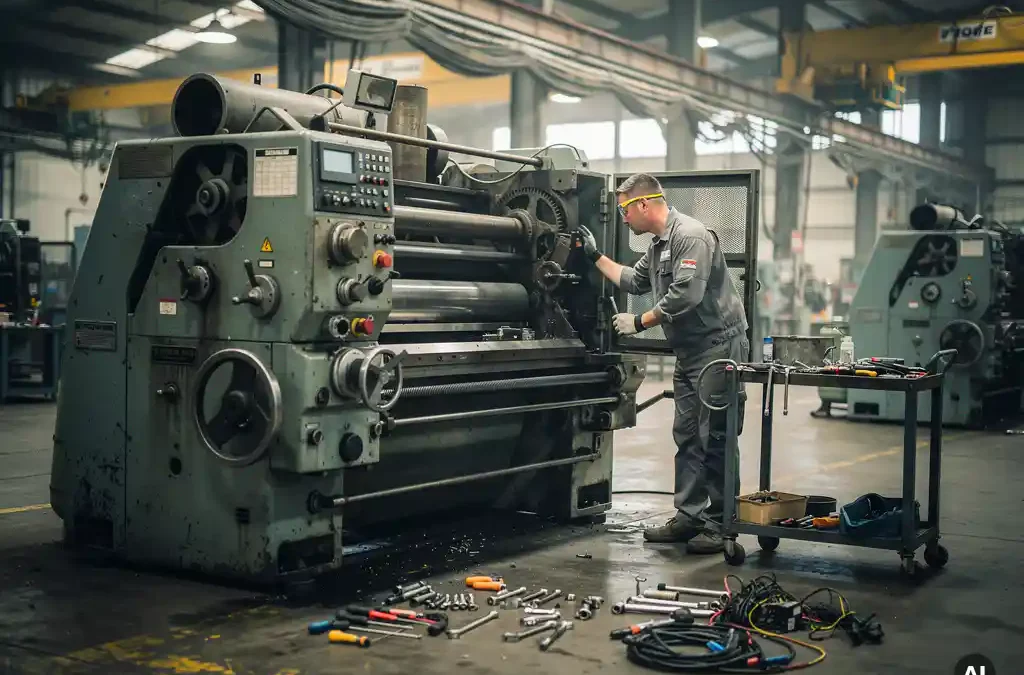
In the world of manufacturing, understanding and mitigating losses is crucial for improving productivity and efficiency. The "six big losses" model is a well-established framework that helps manufacturers identify and address the most common sources of inefficiency. By focusing on these key areas, manufacturers can significantly enhance their Overall Equipment Effectiveness (OEE) and drive lean manufacturing initiatives. This article will explore the six big losses in detail, explaining why they matter and how to tackle them effectively.
Understanding the Six Big Losses
The six big losses refer to the primary categories of productivity loss in manufacturing, as identified by the Total Productive Maintenance (TPM) framework. These losses are Equipment Failure, Setup and Adjustments, Idling and Minor Stops, Reduced Speed, Process Defects, and Reduced Yield. Each represents a specific challenge that can hinder production efficiency.
Equipment Failure involves unplanned stoppages due to breakdowns or malfunctions. Setup and Adjustments cover the time lost during changeovers and startups. Idling and Minor Stops refer to brief interruptions that aren't logged as downtime. Reduced Speed occurs when machines operate below their optimal speed. Process Defects involve products that fail to meet quality standards during production. Finally, Reduced Yield is the loss of materials during startup or first-run waste.
Why the Six Big Losses Matter
Addressing the six big losses is essential for improving manufacturing productivity. These losses directly impact a factory's OEE, which measures how effectively equipment is utilized. By reducing these losses, manufacturers can achieve higher OEE scores, leading to increased output and lower costs.
Moreover, focusing on these losses helps create a culture of continuous improvement. By systematically identifying and addressing inefficiencies, manufacturers can foster a proactive approach to problem-solving, ultimately enhancing overall industrial efficiency.
Identifying Equipment Failure and Setup Losses
Equipment failure is one of the most significant contributors to production downtime. It involves unplanned stoppages caused by machine breakdowns or waiting for materials. To combat this, manufacturers should implement regular maintenance schedules and use predictive maintenance technologies to anticipate failures before they occur.
Setup and adjustments, on the other hand, involve the time lost during changeovers and machine startups. Implementing Single-Minute Exchange of Die (SMED) techniques can significantly reduce setup times by separating internal setup activities (which require the machine to be stopped) from external ones (which can be done while the machine is running).
Tackling Idling, Stoppages, and Speed Losses
Idling and minor stops are often overlooked but can accumulate to cause significant productivity losses. These occur when machines stop briefly for reasons not logged as downtime. Addressing these requires a detailed analysis of production processes to identify and eliminate the root causes of these interruptions.
Reduced speed is another common issue, where machines run below their nominal speed. This can be due to various factors, including machine wear or suboptimal settings. Regular monitoring and adjustments are necessary to ensure machines operate at their intended speed, thus minimizing speed losses.
Addressing Process Defects and Yield Losses
Process defects occur when products do not meet quality standards during production. This not only wastes materials but also requires additional time for rework. Implementing in-line quality checks can help catch defects early, reducing the cost and time associated with rectifying them.
Reduced yield involves losses during startup or first-run waste. By optimizing startup procedures and ensuring machines are correctly calibrated, manufacturers can minimize these losses, thus improving overall yield.
Factorise Software understands the challenges manufacturers face with these losses. Our platform offers solutions tailored to address these inefficiencies, helping you enhance productivity and efficiency. Ready to take the first step? We like to start with a fit-gap session: a day or two to understand where you are, which pain points are most urgent, and which modules deliver the fastest value. Book your first fit-gap session. No sales pitch. Just an honest conversation about what's realistic.
Frequently Asked Questions
What are some common causes of equipment failure in manufacturing?
Common causes of equipment failure include lack of regular maintenance, wear and tear, operator errors, and unexpected mechanical issues. Implementing a preventive maintenance schedule and using predictive technologies can help mitigate these failures.
How can manufacturers effectively reduce setup and adjustment times?
Manufacturers can reduce setup and adjustment times by implementing Single-Minute Exchange of Die (SMED) techniques, which focus on separating internal and external setup activities and streamlining the changeover process.
What strategies can be used to minimize idling and minor stops in production?
To minimize idling and minor stops, manufacturers should conduct a thorough analysis of their production processes to identify root causes of interruptions, and then implement process improvements and employee training to address these issues.
How can process defects be reduced in manufacturing?
Process defects can be reduced by implementing in-line quality checks, using statistical process control methods, and ensuring that all equipment is properly calibrated and maintained to meet quality standards.
What role does employee training play in addressing the six big losses?
Employee training is crucial in addressing the six big losses as it ensures that operators are skilled in handling equipment, understanding maintenance procedures, and identifying inefficiencies, thereby reducing the likelihood of errors and downtime.
How does improving OEE benefit a manufacturing facility?
Improving Overall Equipment Effectiveness (OEE) leads to increased production efficiency, reduced operational costs, and higher quality output, ultimately enhancing the competitiveness and profitability of a manufacturing facility.
What technologies can assist in monitoring and improving equipment speed?
Technologies such as IoT sensors, machine learning algorithms, and real-time monitoring systems can assist in tracking equipment speed, identifying deviations from optimal performance, and suggesting adjustments to improve efficiency.
Related Articles
- Why do traditional MES projects fail?
- What is OPC UA and how does it connect machines to a MES?
- Why does shift handover cause production losses?
- What is skill management in manufacturing?
- What is a skill matrix in manufacturing?
- How do you document manufacturing knowledge before it is lost?
- How do you build a maintenance plan for manufacturing equipment?
- How do sensors reduce machine downtime in a factory?
- What is MTTR in manufacturing?
- What is the difference between real-time OEE and end-of-shift OEE?
- What is ISO 22400 and what does it have to do with OEE?
- Why does inconsistent OEE measurement make improvement impossible?
- What is a good OEE score for a manufacturing plant?
- What is the difference between a reactive and a proactive manufacturing operation?
- How do you measure performance losses in OEE?